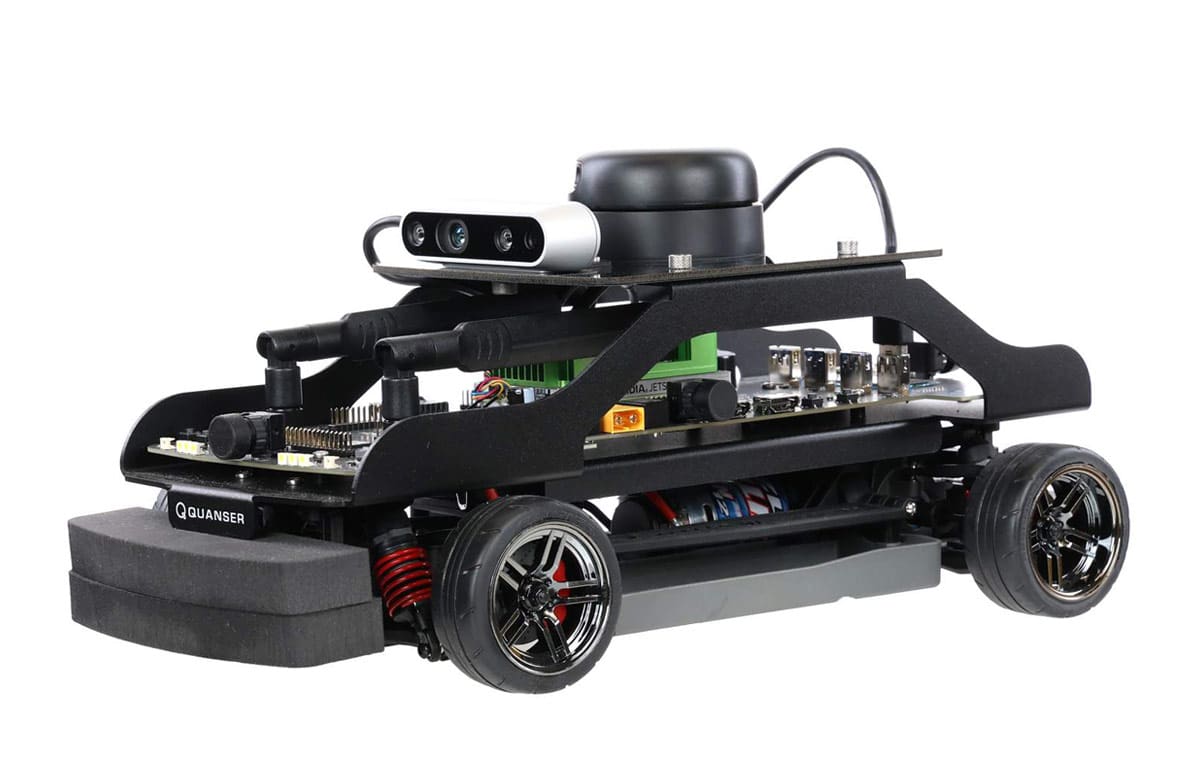
STEM Interactive Exhibit

Captivate visitors with a ready-to-use exhibit showcasing modern self-driving and applied AI technology
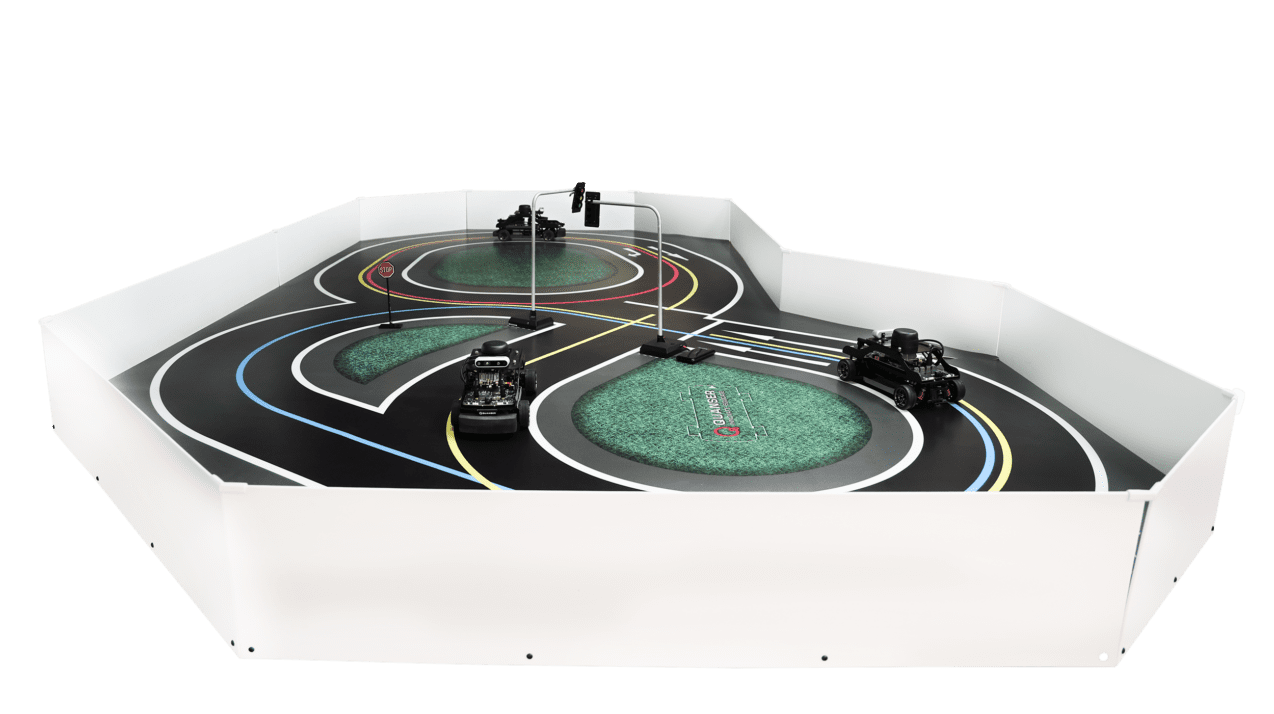
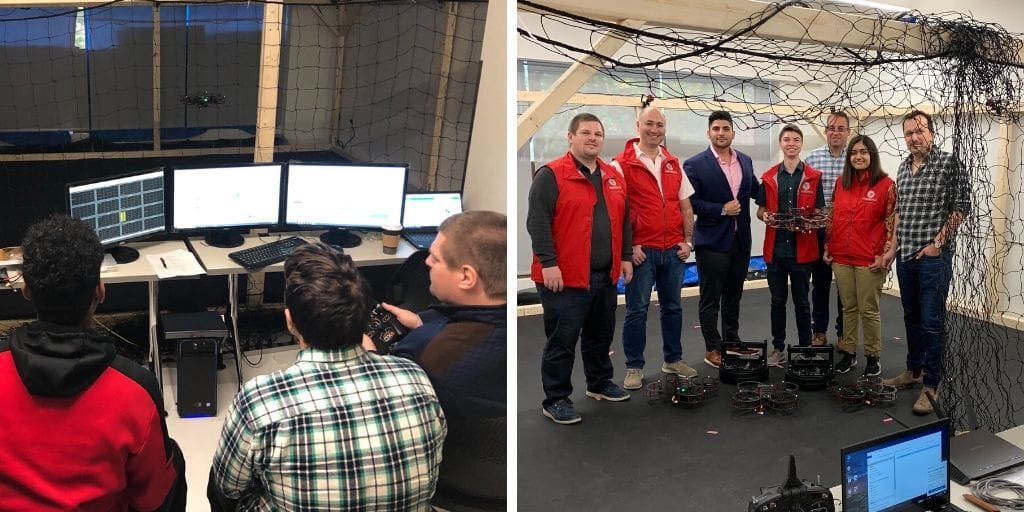
The Quanser STEM Interactive Exhibit demonstrates exciting self-driving technologies in an accessible and interactive scenario that highlights some of the critical systems that are used by modern vehicles today.
The exhibit is designed to be a simple solution for a wide variety of campus teams including faculty, summer programs, administration, and outreach departments to make their university teaching and research stand out.
Gallery

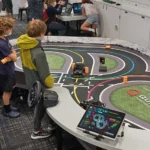
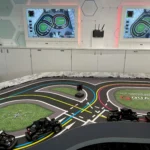
Product Details
Audience gain a hands-on understanding of each element of an intelligent system and participate in pre-defined activities and challenges through the app interface:
- SEE: Participants watch what the vehicle is currently seeing from the camera point of view.
- THINK: Participants observe the operation of a state machine and artificial neural network as they work together to control the behaviour of the vehicle.
- DO: Participants get visibility into the power and energy usage of the car and have the ability to modify the speed and acceleration of the vehicle and monitor those effects on the power system. They can monitor and change car signals, like turning lights on/off or even honk.
- TALK: Each car communicates to the control station laptop which can adjust the traffic light to achieve the optimal flow of traffic.
- INTERACT: Participants are encouraged to place traffic signs along the border of the track to observe their effect on the behaviour of the vehicles.
The exhibit is designed to be a simple solution for a wide variety of campus teams including faculty, summer programs, administration, and outreach departments to make their university teaching and research stand out.
- Engage and Inspire: Bring engineering concepts to life with a meaningful STEM experience that sparks curiosity and motivation among audience.
- Connect With More Audience: Effortlessly setup and tear down a compact exhibit to expand your opportunities to leverage your investment across the department and institution.
- Worry Free: The comprehensive package includes everything you need from tools and software to suggested sample scripts for various experience levels.
| Dimensions | 39 x 21 x 21 cm |
| Weight (with batteries) | 2.7 kg |
| Power | 3S 11.1 V LiPo (3300 mAh) with XT60 connector |
| Operation time (approximate) | ~2 hours 11 m (stationary, with sensors feedback) |
| 30 m (driving, with sensor feedback) | |
| Onboard computer | NVIDIA® Jetson™ Orin AGX |
| CPU- 2.2 GHz 8-core ARM Cortex-A78 64-bit | |
| GPU- 930 MHz 1792-CUDA/56-TENSOR cores | |
| NVIDIA Ampere GPU architecture 200 TOPS | |
| Memory- 32GB 256-bit LPDDR5 @ 204.8 GB/s | |
| LIDAR | LIDAR with 16k points, 5-15 Hz scan rate, 0.2-12m rang |
| Cameras | Intel D435 RGBD Camera |
| 360° 2D CSI Cameras using 4x 160° FOV wide angle lenses, 21fps to 120fps | |
| Encoders | 720 count motor encoder pre-gearing with hardware digital tachometer |
| IMU | 6-axis IMU (gyroscope & accelerometer) |
| Safety features | Hardware “safe” shutdown button |
| Auto-power off to protect batteries | |
| Expandable IO *Subject to change | 2 user PWM output channels |
| Motor throttle control | |
| Steering control | |
| 2 unipolar user analog input channels, 12-bit, +3.3V | |
| motor current analog inputs | |
| 3 encoder channels (motor position plus up to two additional encoders) | |
| 11 reconfigurable digital I/O | |
| 3 user buttons | |
| 2 general purpose 3.3V high-speed serial ports* | |
| 1 high-speed 3.3V SPI port (up to 25 MHz)* | |
| 1 1.8V I2C port (up to 1 MHz)* | |
| 1 3.3V I2C port (up to 1 MHz)* | |
| 2 CAN bus interfaces (supporting CAN FD) | |
| 1 USB port | |
| 1 USB-C host port | |
| 1 USB-C DRP | |
| Connectivity | Wi-Fi 802.11a/b/g/n/ac 867 Mbps with dual antennas |
| 1x HDMI | |
| 1x 10/100/1000 BASE-T Ethernet | |
| Additional QCar Features | Headlamps, brake lights, turn signals and reverse lights |
| Individually programmable RGB LED strip (33x LEDs) | |
| Dual microphones | |
| Speaker | |
| 2.7″ LCD TFT 400×240 for diagnostic monitoring |
- Control Station Laptop
- Map and Boarders
- Traffic Lights & Signs
- WIFI Router
- Guided Experiences
- QCars (Sold Seperately)
Group Citation: Self-driving
Explore more: All Research Paper
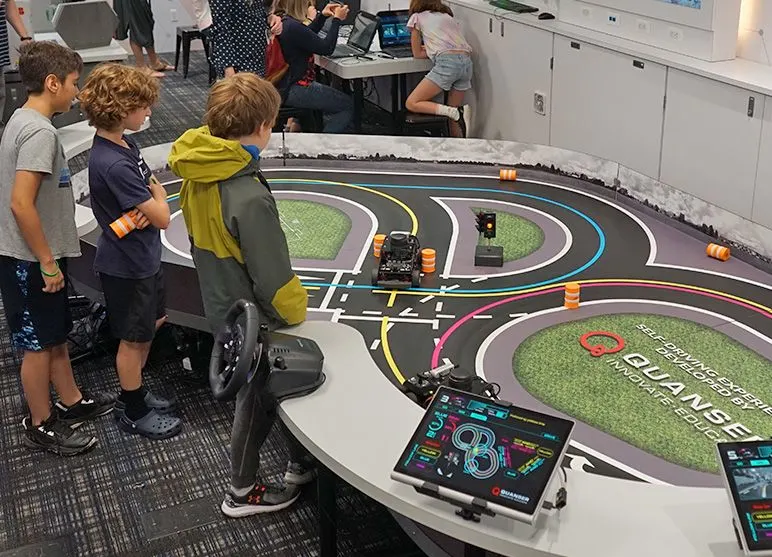
Related Products

Self-Driving Car Studio
A multi-disciplinary turnkey laboratory that can accelerate research, diversify teaching, and engage students from recruitment to graduation.
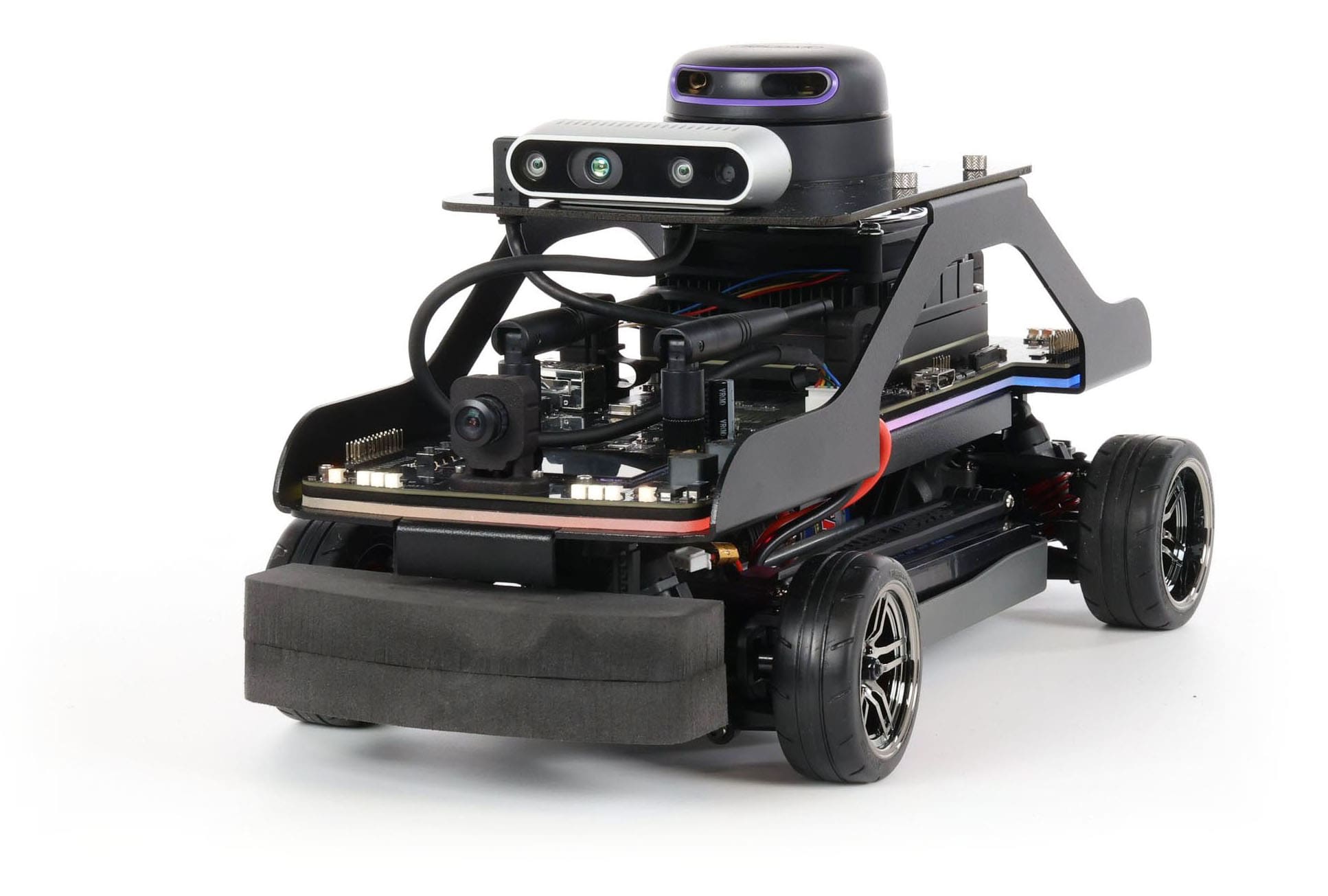
QCar 2
Sensor-rich autonomous vehicle for self-driving applications.