Autonomous Systems & Applied AI
About This Lab
Self-Driving
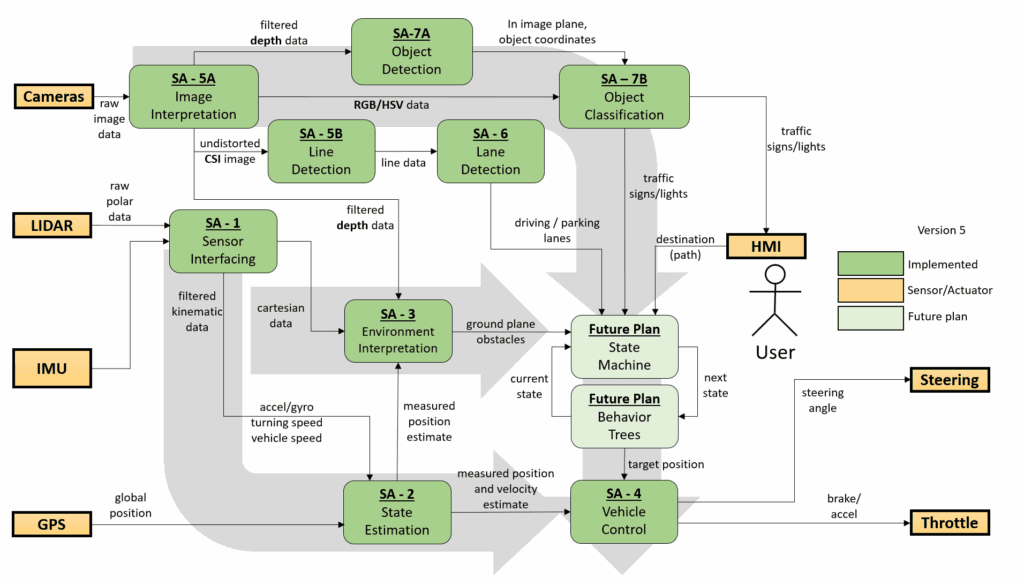
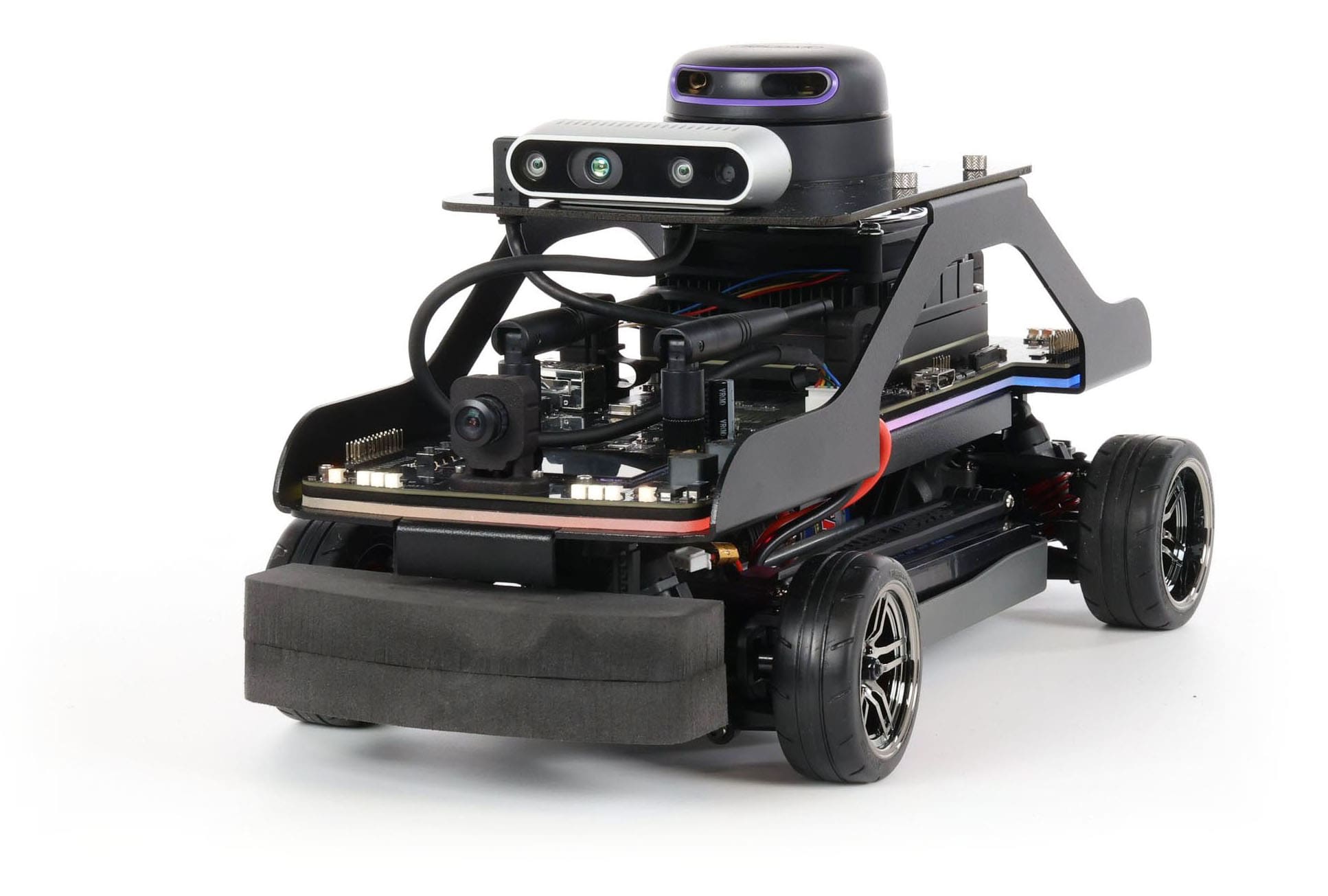
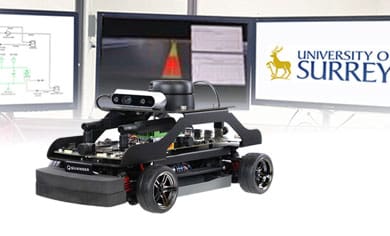
Quanser’s self-driving solution takes a turnkey, cohesive and application-centric approach to enabling education and research in this space. Built on an open-architecture foundation and designed to be language agnostic, this unified ecosystem covers ground in both state-of-the-art hardware as well as support for software APIs and frameworks already in use by academia and industry alike.
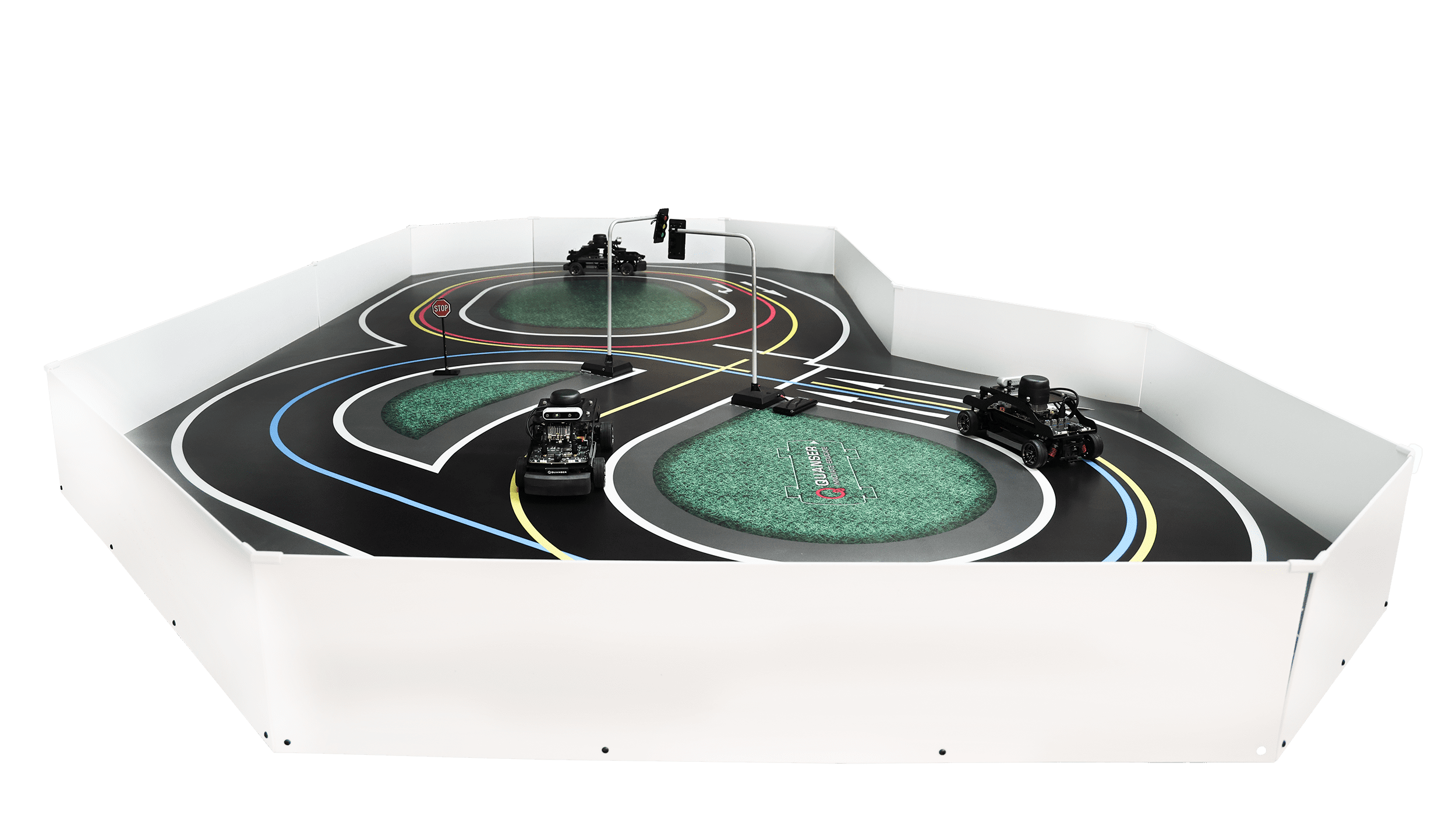
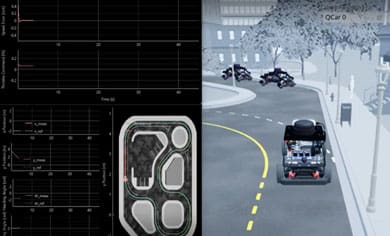
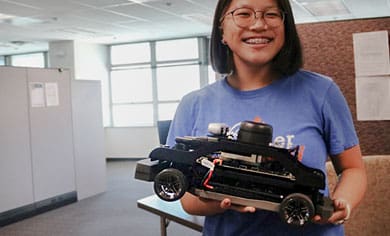
Access to both a fleet of NVIDIA powered 1/10th scale research vehicles, infrastructure such as smart traffic lights, and a self-driving cityscape map creates a autonomy sandbox for self-driving courses and research endeavors. Further access to a digital twin and equivalent of the hardware and environment via Quanser
Interactive Labs further enables academics looking to verify code via a dynamic simulation, or generate datasets with complex environments otherwise not feasible in a lab setting, such as 50km of highway.
Finally, advanced curriculum targeting relevant self-driving concepts such as lane-keeping, state estimation, lateral Stanley control, behavior planning, etc., provide students with safe hands-on activities to explore autonomy in the field through cascaded lab experiences.
- Develop foundational self-driving engineering literacy
- Gain operational skills in the practical software implementation of self-driving algorithms
- Explore and compare the performance and accuracy of analytical vs. machine learning
approaches to perception - Explore visual, ranging and odometric sensing capabilities and multi-sensor & pr obabilistic
fusion technologie - Explore multi-agent complex driving scenarios and ego-vehicle decision making pipelines
- University of Surrey, UK
- Oakland Schools Michigan, USA
- Universidad Técnica Federico Santa Marí, Chile
- Texas A&M, Texas, USA
- Purdue University, Indiana, USA
- York University, Canada
- KFUPM, Saudi Arabia
- UT Austin, Texas, USA
- Northeastern University, Massachusetts, USA
- Queen’s University, Canada
- University of Michigan, Michigan, USA
- Beijing Institute of Technolog, China
Related Products


Related Case Studies
Drones: The Future of Wind Turbine Inspection and Maintenance
Hands-on Education and Research Needs Solved by Partnership with Quanser
Accelerating Through the Apex: Teaching with Quanser's Self-Driving Car Studio
Using Quanser Autonomous Vehicles for the High School Outreach Programs
Kickstart 2023 with a hardware update: What makes QDrone 2 the ideal aerial research platform?
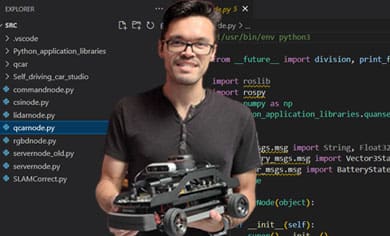
Interfacing ROS and Quanser products - From the perspective of the QCar