
Introduction: Where Vision Meets Innovation
At Quanser, we have always believed that transformative engineering education thrives at the intersection of visionary institutions and cutting-edge technology. That belief has come to life in a bold new way through our partnership with Southern Methodist University’s Lyle School of Engineering.
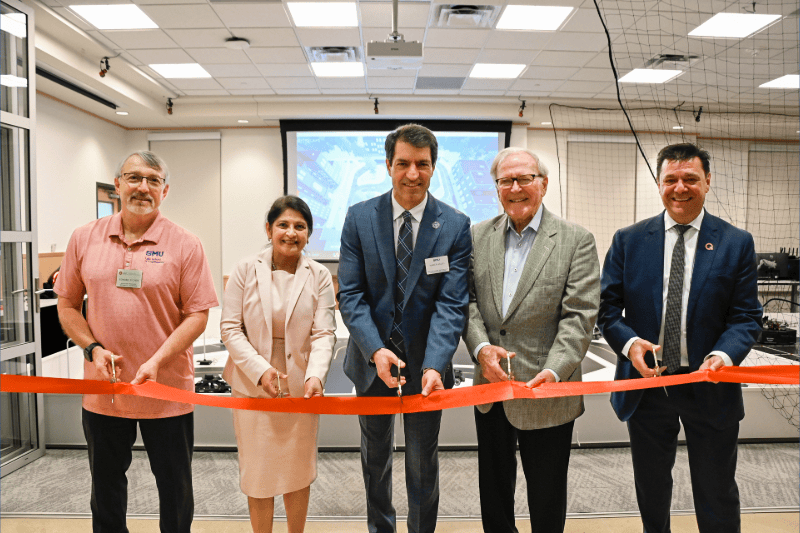
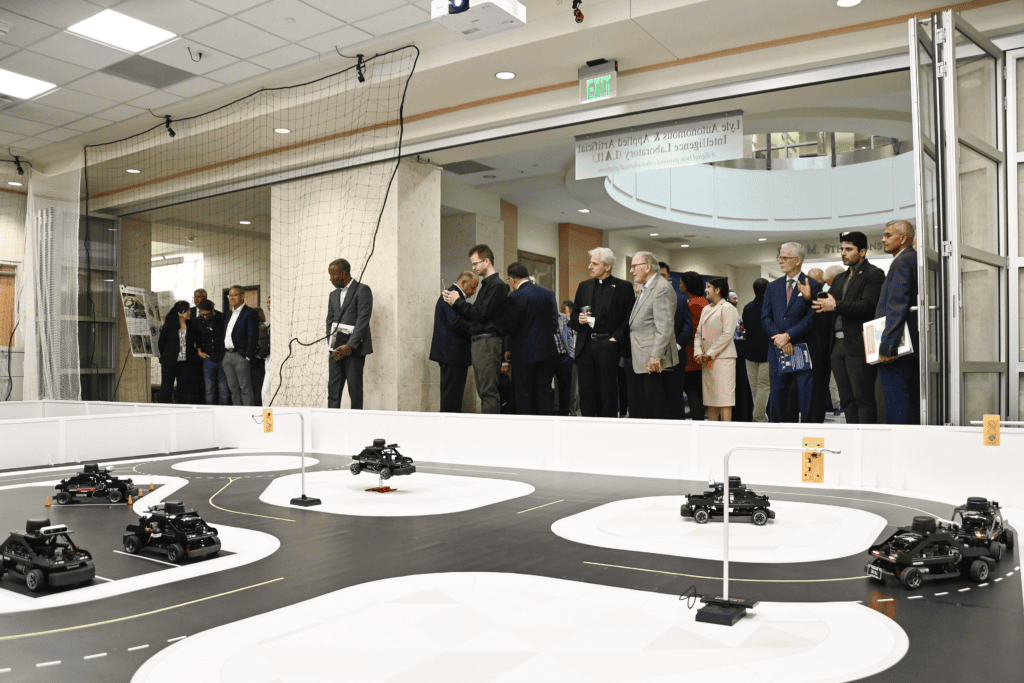
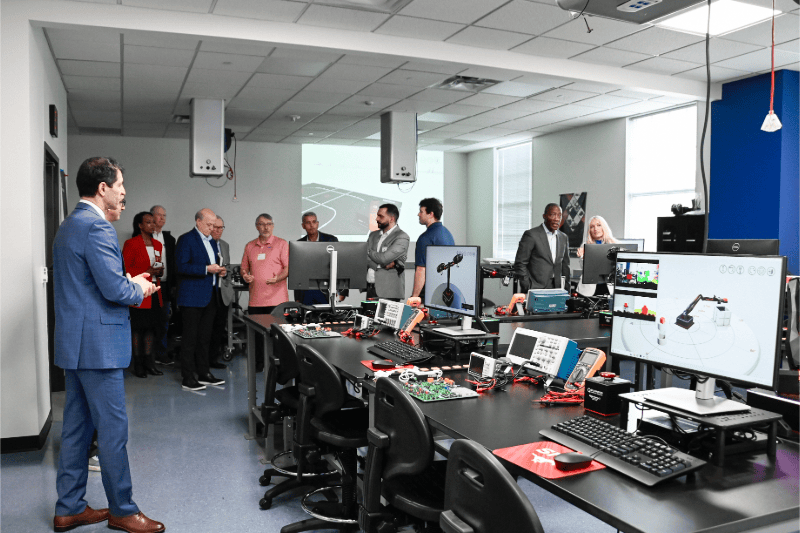
SMU Lyle recently unveiled its new AI and Autonomous Systems laboratories, powered by Quanser technology, across the first and second floors of the Embrey Engineering Building. The result, the Lyle Autonomous and Applied Artificial Intelligence Lab (LAIL) and its connected spaces, brings together more than 1,800 square feet of hands-on learning and research infrastructure focused on artificial intelligence, robotics, autonomous systems, controls, mechatronics, and digital twins. For Quanser, this is more than another lab deployment. It’s a shared commitment to shaping the next generation of engineers and advancing the frontier of AI and autonomy.
Why SMU Lyle? Why Now?
AI and autonomy are no longer isolated technical topics, they are becoming foundational capabilities across mechanical engineering, electrical and computer engineering, computer science, controls, robotics, aerospace, advanced manufacturing, and cyber-physical systems. As Dean Nader Jalili, Mary and Rich Templeton Dean, SMU Lyle School of Engineering, shared in SMU’s announcement,
“These laboratories represent a major step forward in our mission to prepare future-ready engineering leaders, creating opportunities to solve complex challenges, drive innovation, and shape the future of engineering.”
That vision is closely aligned with Quanser’s mission. We believe the next generation of engineering programs will be defined by how effectively they integrate AI, autonomy, digital twins, and physical experimentation into the student and researcher experience — and SMU Lyle’s leadership made it a natural partner to build that future with.
Creating Immersive Learning — At Scale
A Connected Ecosystem of Physical and Digital Systems
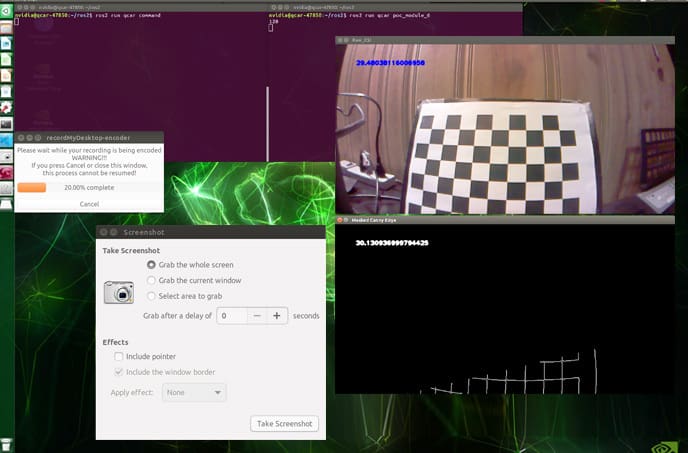
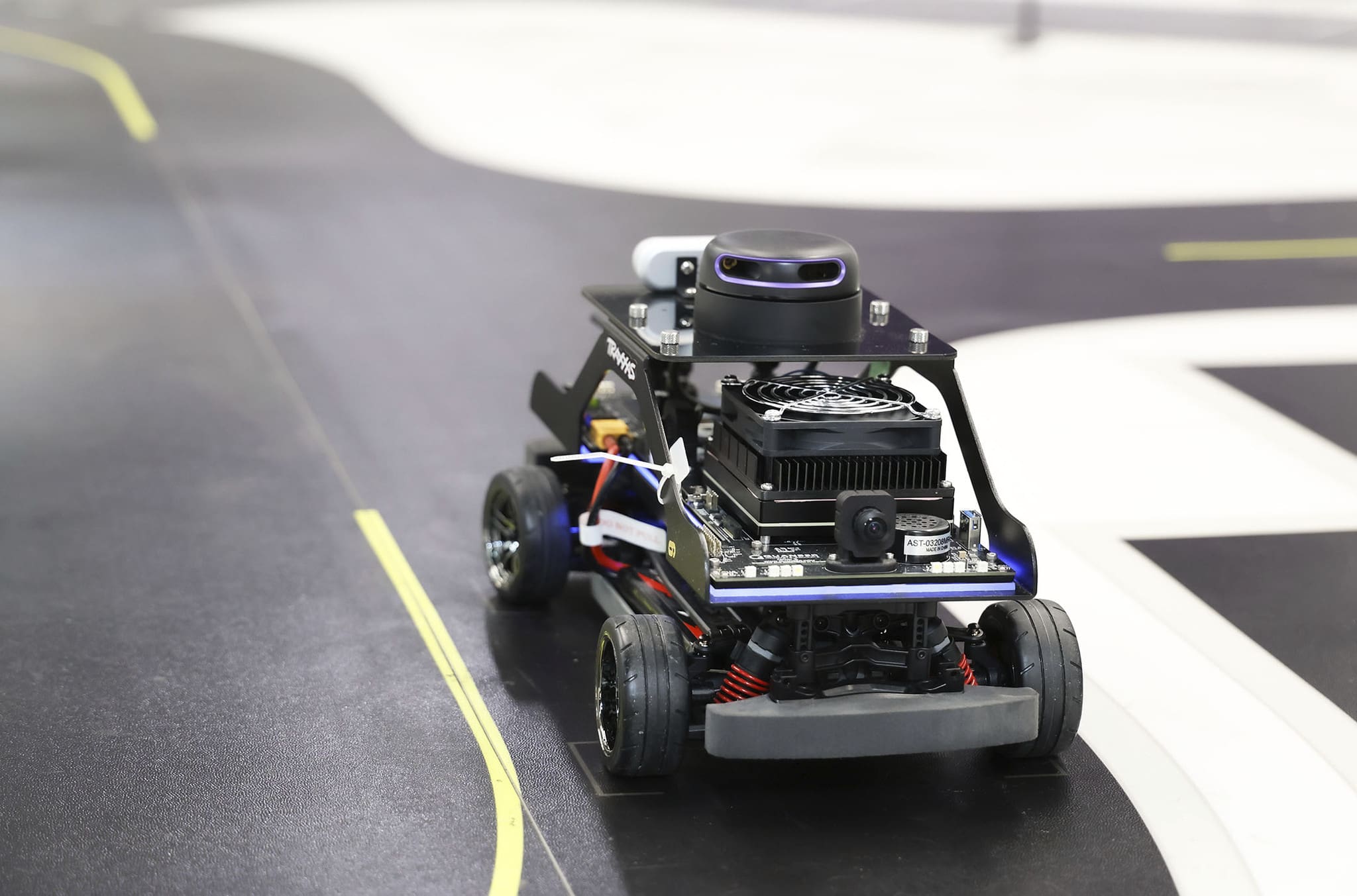
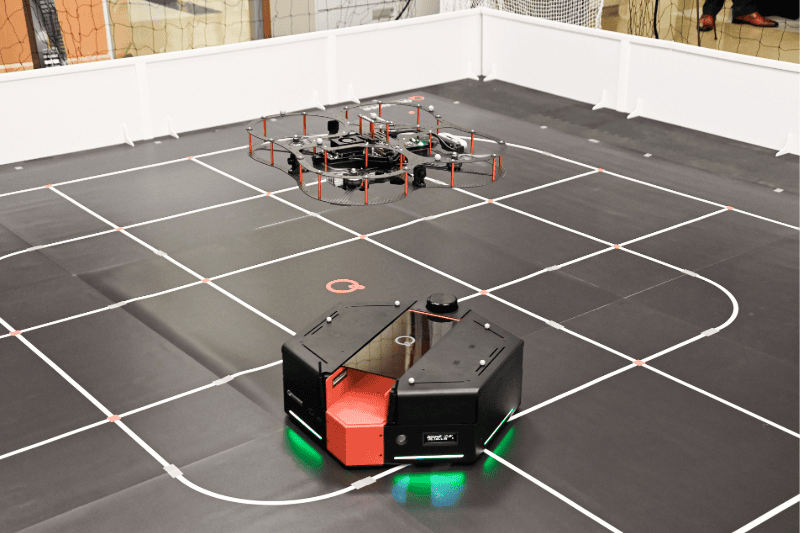
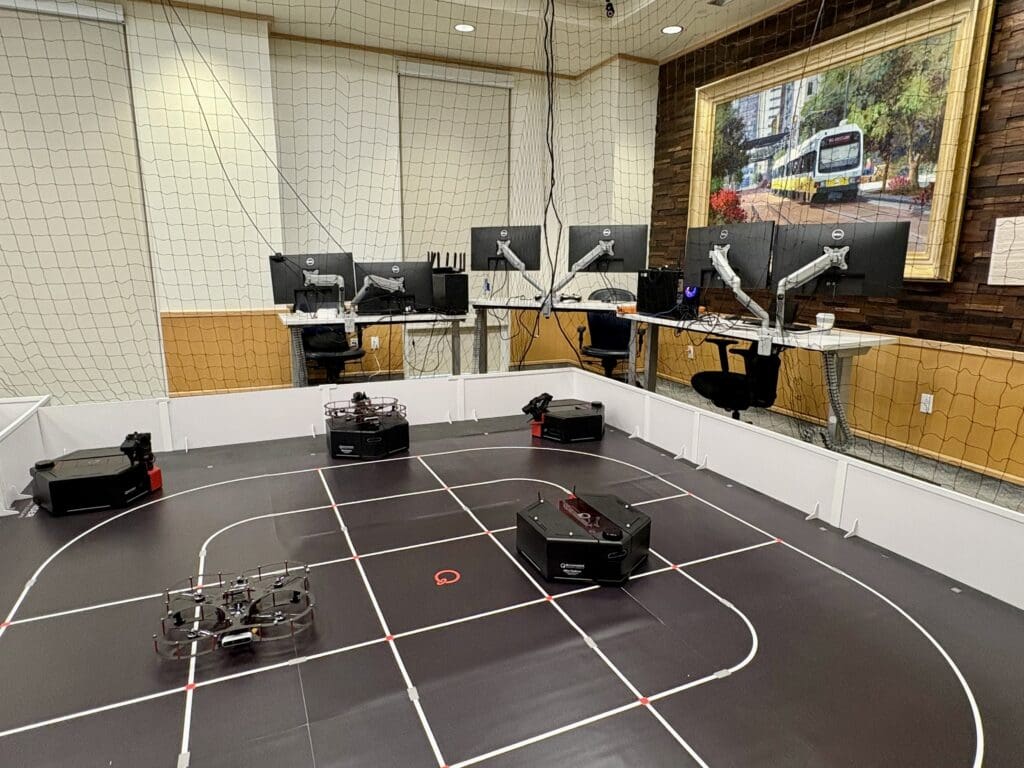
Students and researchers at SMU Lyle now have access to a connected ecosystem of physical systems and digital twins, including Quanser NVIDIA GPU-powered Self Driving Car Lab, Drone Research lab, Mobile Robotics Lab, Mechatronics Design Lab, and AI-enabled experimentation tools, all integrated with high-fidelity digital twins.
Seamless Theory-to-Practice Integration
This creates a powerful bridge between theory and implementation, allowing students to move beyond simulation alone and gain real experience with the technologies shaping the future of engineering practice — designing, validating, deploying, and improving intelligent systems in real-world conditions.
From Hands-On Learning to Research — and Beyond
The SMU Lyle labs aren’t limited to coursework. They’re designed to support teaching, research, multidisciplinary collaboration, and long-term program growth, giving faculty a flexible foundation for advanced research and curriculum development.
For Quanser, partnerships like this are central to our role in the future of engineering education. Our work isn’t only about providing hardware or software — it’s about helping universities build ecosystems where students experience AI and autonomy in meaningful, practical, and academically rigorous ways, and helping institutions turn ambitious strategic goals into operational, impactful learning environments.
A New Model for Academic-Industry Partnership
One of the most rewarding aspects of this project has been seeing SMU Lyle students, faculty, and leadership embrace the labs not as static facilities, but as dynamic platforms for innovation. They give students the confidence that comes from working directly with real systems, and they give the institution a visible, future-focused capability that can evolve with the needs of industry and society.
“Having a lab of this scale is what we live for at Quanser, and it is incredibly meaningful to see it come together at Southern Methodist University. Dr. Jalili has worked with Quanser in different roles throughout his career for the past 26 years, so this partnership represents a continuation of the value he has long placed on what Quanser can do.” Paul Gilbert, CEO of Quanser, spoke at the grand opening, “Putting together a lab at this scale was not easy, and there were certainly challenges along the way, but we had the right partner that stayed committed to the vision. This lab has been built with tremendous thought and intent. It was designed with the future in mind, supporting multiple disciplines, multiple programs, and many years of impact on the engineering education and research at SMU.”
Why Academic Leaders Should Take Note
The SMU Lyle AI and Autonomous Systems labs demonstrate how institutions can:
- Build multidisciplinary, curriculum-ready labs that serve mechanical, electrical, computer, and aerospace engineering programs from a single connected space
- Combine physical hardware with digital twins so hands-on learning scales beyond the constraints of lab hours or equipment count
- Give faculty a flexible research foundation that grows alongside emerging technology
- Create a visible, recruitment-ready signal of institutional commitment to AI and autonomy education
How Your Institution Can Lead the Change
At Quanser, we are proud to be the engine behind this innovation, and we are actively seeking to collaborate with more institutions that share our passion for reimagining engineering education. This work is more urgent than ever: global demand for AI and autonomy talent is dramatically outpacing supply, with employers worldwide reporting AI skills as their hardest capability to hire for. These gaps aren’t just numbers — they represent critical bottlenecks in innovation, infrastructure, and national competitiveness. By working with forward-thinking institutions like SMU Lyle, Quanser is helping close this gap by delivering scalable, modern, and deeply practical engineering education experiences.
We are proud to partner with SMU Lyle on this important initiative and excited to see how these labs will empower students, faculty, and researchers for years to come.
If you’re ready to transform your engineering programs and inspire the next generation of innovators, we’d love to talk.