
Webinar Details
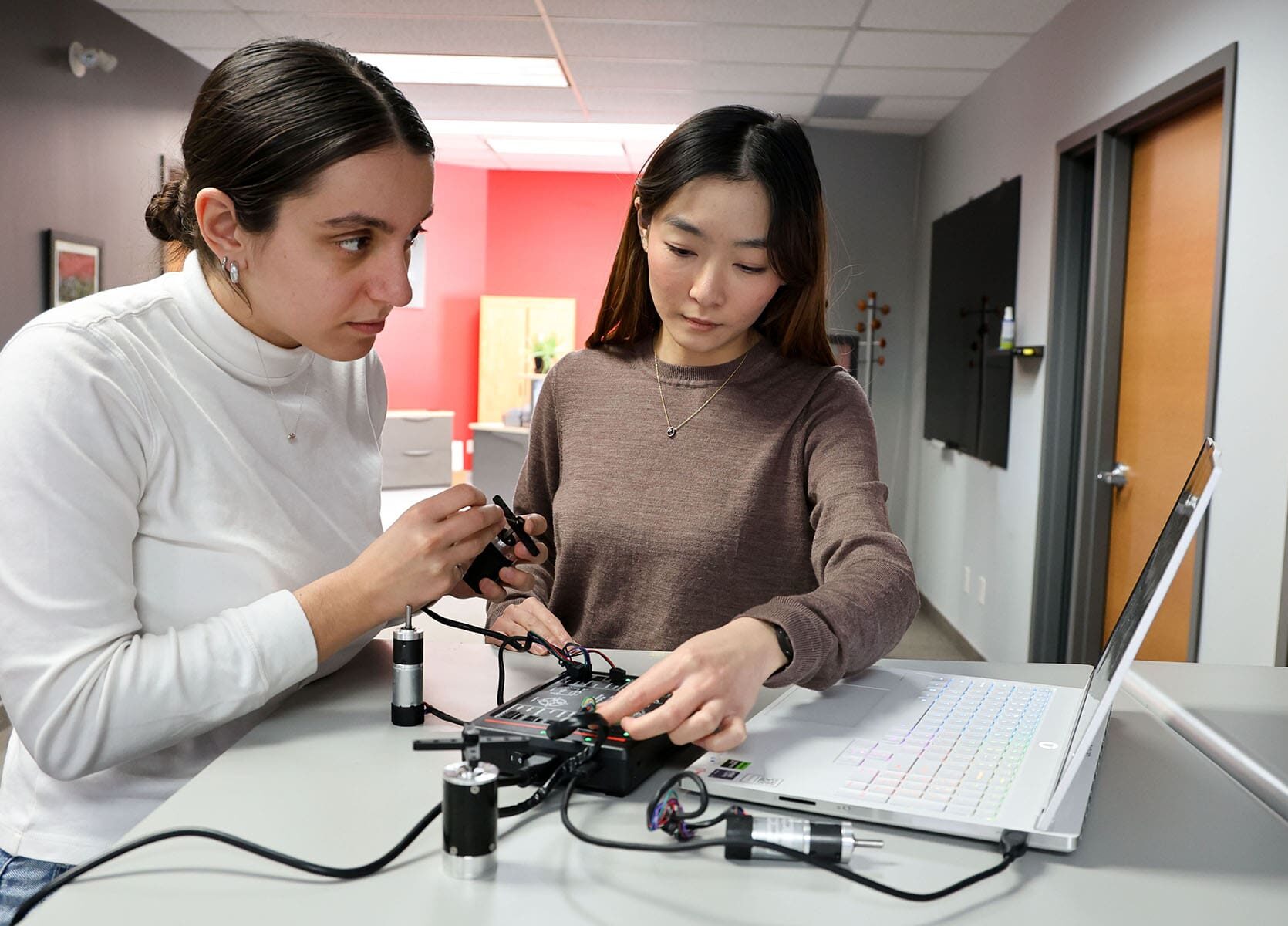
Quanser has been a member of the academic community for almost 40 years, working with academic leaders from around the world to understand their needs and build solutions for the challenges of teaching and research. Over that time, we have found one common challenge almost universally, the development of academically efficient labs. The efficient allocation of resources (time, faculty, space, staff, etc.) without a significant impact on the quality of the student experience is essential, but often difficult to control with changing enrolment, budget, space and faculty.
In this presentation Peter Martin, Director of Engineering, will outline an approach to helping faculty and staff to increase the efficiency of their labs and programs by reducing the time needed to prepare and deliver lab experiences, minimizing the overall budget required to deliver multiple labs and hands-on experiences across programs, and optimizing the space required. Beyond those metrics, Quanser has developed a design philosophy focused on platforms for multidisciplinary applications. This approach has ensured that across different lab structures, pedagogical approaches, and strategic tactics, the Quanser ecosystem of platforms are the most efficient way to increase lab efficiency.

Presenter’s Bio

Peter Martin
Peter Martin is the Director of Engineering at Quanser, where his career has been focused on driving innovation in engineering education. He ensures Quanser’s products and services remain at the leading edge of the academic market. Previously, Peter managed the academic team for a decade, overseeing the development of key hardware and software platforms, curriculum, and mobile apps. His background includes a B.Sc.Eng in Mechatronics and an M.A.Sc in Space Mechatronics from the University of Toronto, where he also worked as a lab engineer and consulting mechatronics engineer. Building on his past experiences, Peter has become passionate about the holistic application of practical learning experiences to the overlapping fields of robotics and mechatronics as a foundation for modern technologies including autonomy and applied AI.