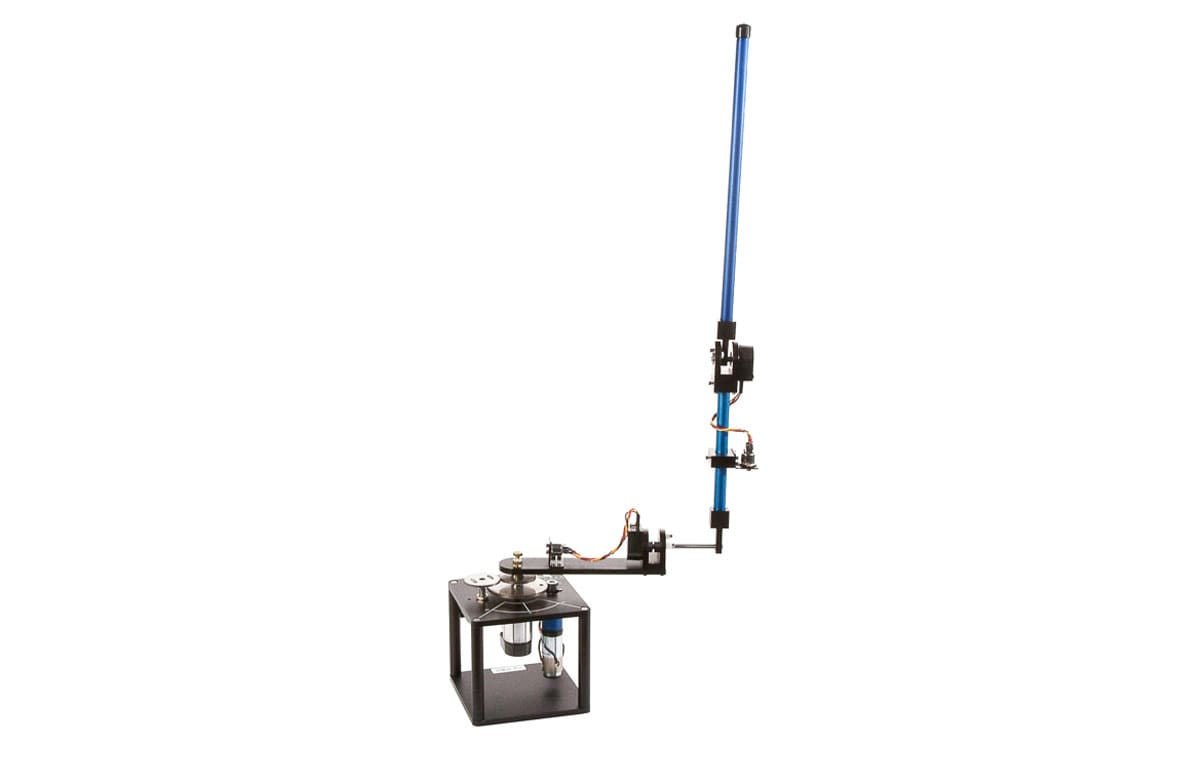
Qube-Servo 3

The quickest path to practical controls
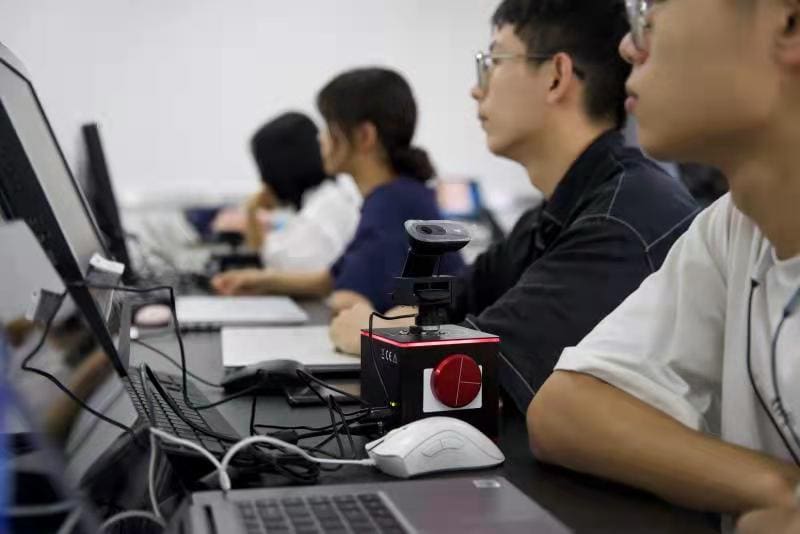
The Qube Servo 3 is the fastest and most efficient way to bring modern, hands-on learning experiences into your Control Systems course. The system is equipped with a high-quality direct-drive brushed DC motor, two encoders, an internal data acquisition system, and an amplifier. Connect with USB to a Windows PC using MATLAB Simulink or Python.
Qube Servo 3 is a part of the Control Systems & Dynamics Lab Collection – Introduction to Controls Teaching Lab.

Product Details
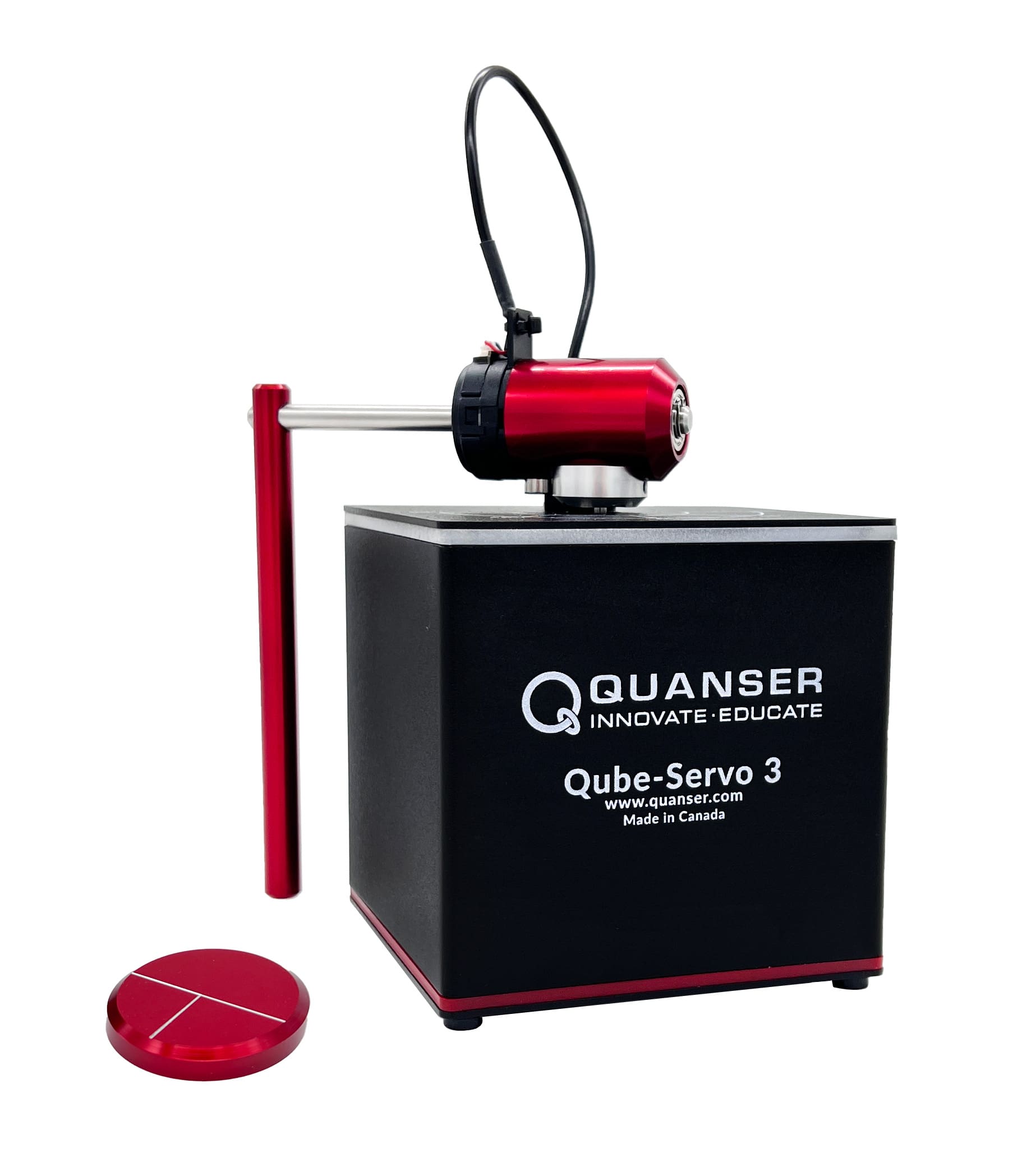
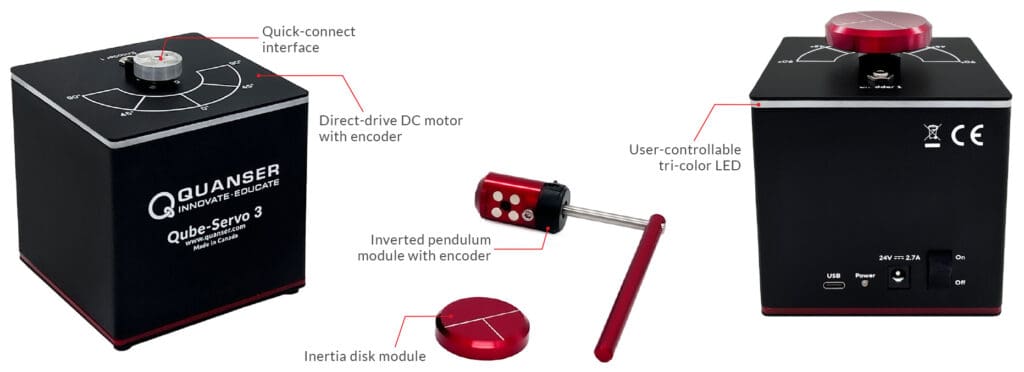
Qube-Servo 3 comes with a quick-connect inertia disk and an inverted pendulum module. You can also design and 3D print your own module to expand the scope of the experiment or create an engaging student project. Take advantage of the comprehensive ABET-aligned course material for MATLAB® Simulink®, or design and validate your own controllers. With additional language support in Python and C/C++, new features include the ability to disable deadband compensation to directly model and control the DC motor.
- Safe: Built-in motor stall and thermal protection
- Comprehensive Courseware: ABET-aligned courseware mapped to popular control engineering textbooks
- Options: Inertia disk and pendulum attachment included
| Interface | USB |
| Dimensions | 10.2 cm x 10.2 cm x 11.7 cm |
| Weight | 1.083 kg |
| Pendulum Length (Pivot to Tip) | 9.5 cm |
| DC Motor Encoder Resolution (Quadrature Mode) | 2,048 counts/revolution |
| DC Motor Nominal Voltage | 24 V |
| DC Motor Nominal Current (No Load) | 0.016 A |
| DC Motor Nominal Speed (No Load) | 5400 RPM |
| Current Sense | 12-bit, with 16 sample PWM synchronized digital filtering |
| Encoder | 2 x 24-bit |
| Digital Tachometer | 2 x 32-bit with 13.8ns resolution |
Courseware Topics
| Inertia Disk Module | Pendulum Module |
|---|---|
| Hardware integration | Moment of inertia |
| Filtering | Pendulum modeling |
| Step response modeling | State-space modeling |
| Block diagram modeling | Pendulum balance control |
| Parameter estimation | Swing-up control |
| Frequency response modeling | LQR state-feedback balance control |
| State-space modeling | Pole-placement state-feedback balance control |
| Friction identification | |
| Stability analysis | |
| Second-order systems | |
| Routh-Hurwitz stability | |
| Nyquist stability | |
| PD control | |
| Lead Compensator | |
| Proportional control | |
| Steady-state error | |
| Load disturbance | |
| Robustness | |
| Optimal control | |
| Introduction to discrete control | |
| Discrete control design | |
| Discrete control stability |
| Data acquisition device | Integrated |
| Amplifier | Integrated |
| Control design environment | QUARC™ for MATLAB Simulink |
| Quanser API’s for Python and C/C++ |
Click here to view our comprehensive mapping tool which allows you to align courseware sections with specific chapters of the Experience Controls textbook app, as well as the most popular engineering textbooks such as:
Control Systems Engineering – N.S. Nise
Feedback Systems – K.J. Astrom & R.M. Murray
Feedback Control of Dynamic Systems – G.F. Franklin, J.D. Powell & A. Emami-Naeini
Modern Control Systems – R.C. Dorf & R.H. Bishop
Modern Control Engineering – K. Ogata
Automatic Control Systems – F. Golnaraghi & B.C. Kuo
Control Systems Engineering – I.J. Nagrath & M. Gopal
Mechatronics – W. Bolton
Group Citation: Fundamental Control
Explore more: All Research Paper
Related Products
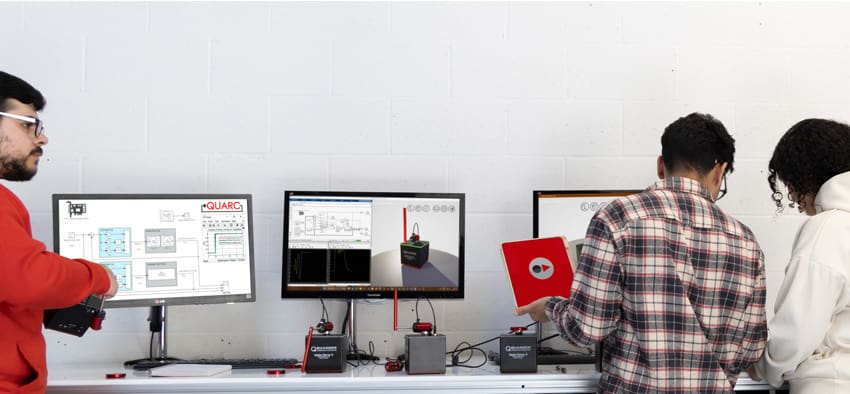
Introduction to Controls Teaching Lab
Turnkey Lab for Scalable, Hands-On Teaching.

QLabs Virtual Qube-Servo 3
Virtual platform for distance and blended undergraduate control systems courses
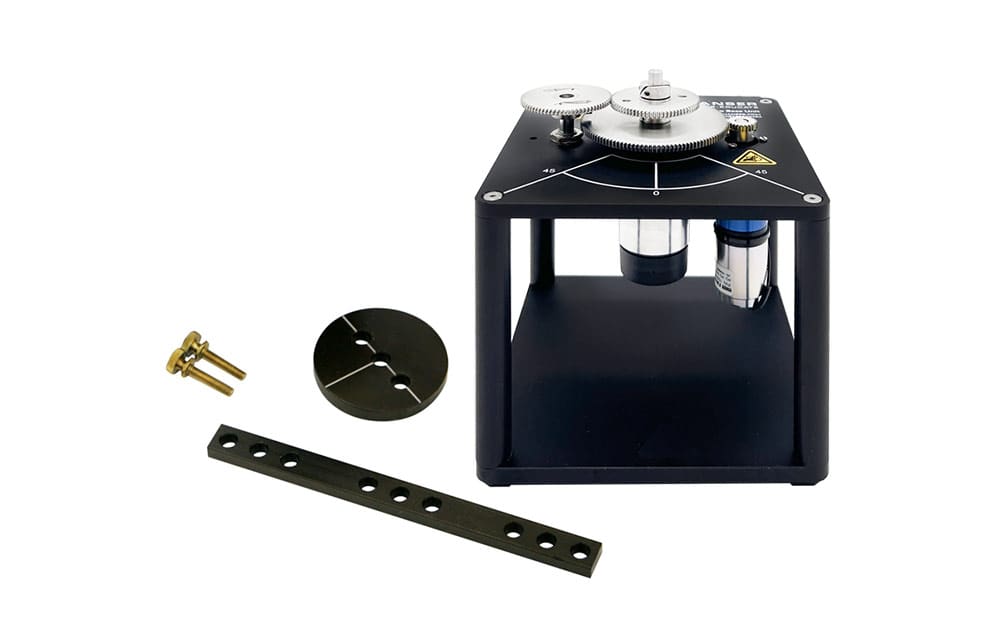
Rotary Servo Base Unit
Foundational modular control experiment
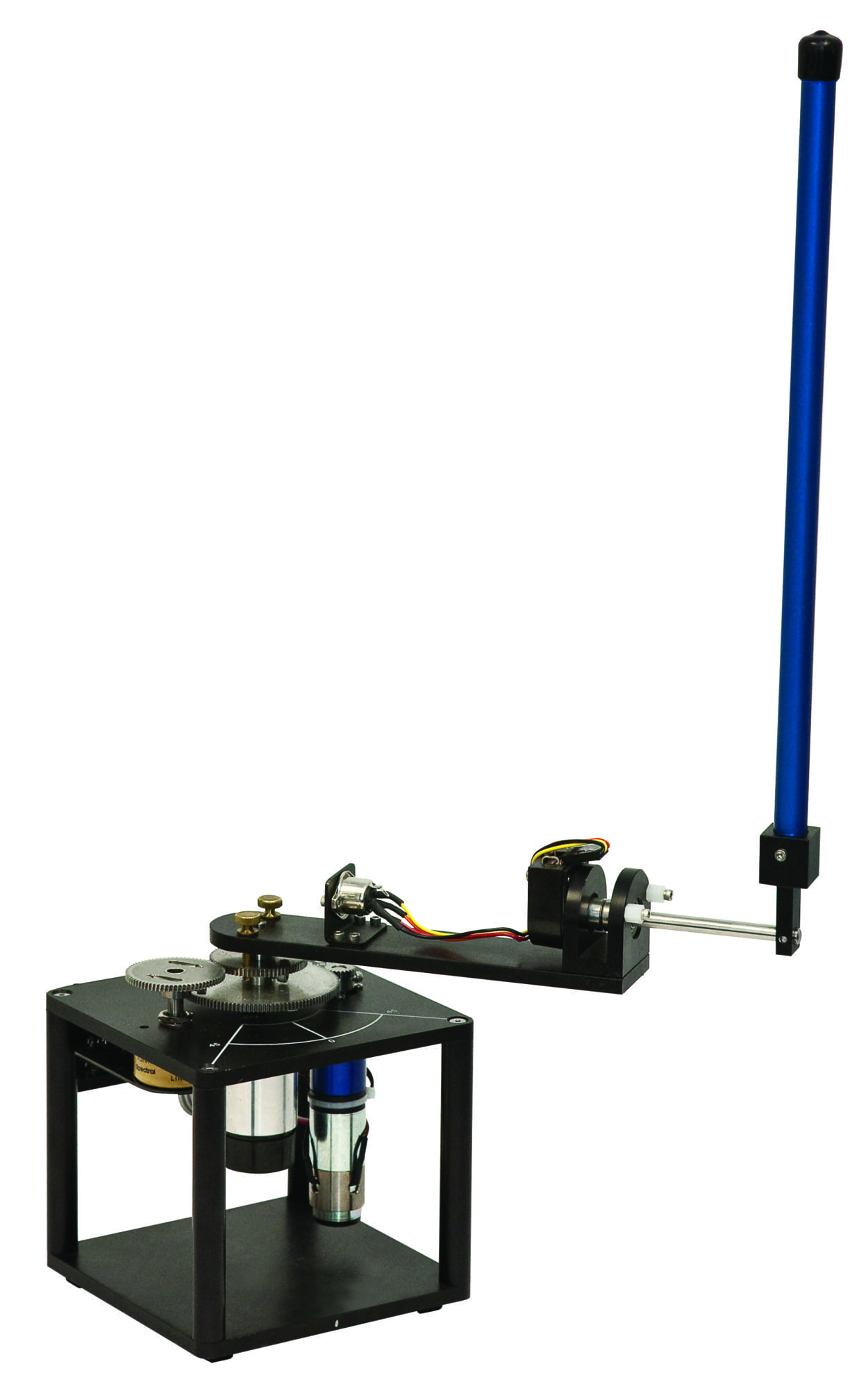
Rotary Inverted Pendulum
A classic modeling and control systems experiment