

Overcoming Research Challenges in Autonomous Systems
An ever-changing industrial landscape and the associated requirements for autonomous systems technology pressures academics in adjacent fields to publish faster. Whether you’re building pipelines for self-driving cars, experimenting with distributed aerial systems, or validating AI-driven perception algorithms, academic research and innovation has time-sensitive aspects and constraints like never before.
In academic research on autonomous systems, delays and inefficiencies can stem from hardware assembly, sensor integration, software issues and safety uncertainties. In one of our case studies, Dr. Milad Siami from Northeastern University, USA noted having “lab equipment ready to go was crucial to start our research right away,” highlighting how immediate platform availability can eliminate long setup phases. The more time researchers spend troubleshooting, the less time they spend on what really matters: producing impactful research outcomes.
QCar 2: A platform that accelerates Autonomous Vehicle Research
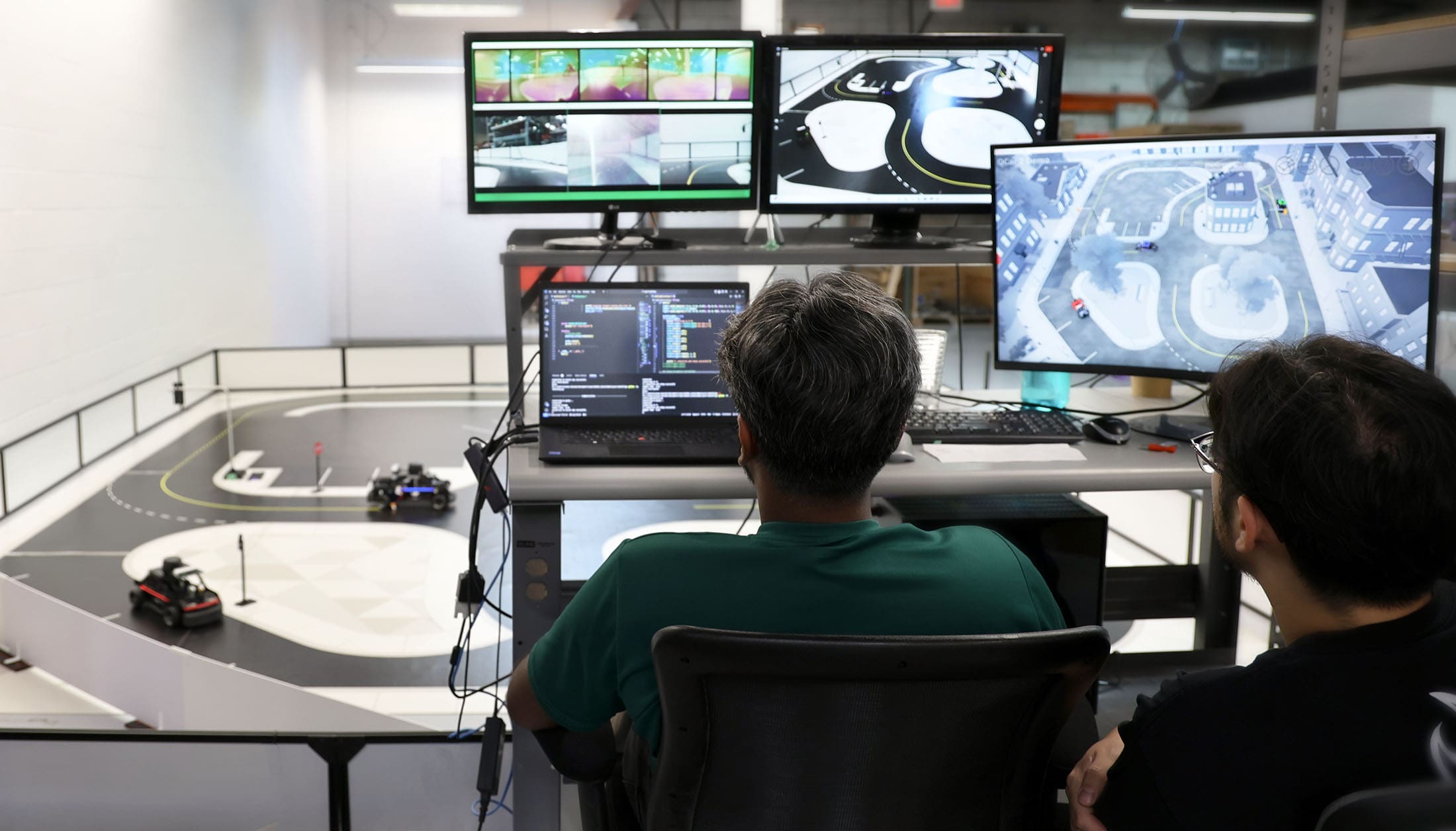
When it comes to ground systems, QCar 2 stands out as a turnkey alternative to DIY platforms like F1TENTH. F1TENTH as a research validation platform requires assembly on site and also has software compatibility constraints, which can sidetrack central research goals and objectives , QCar 2 arrives ready to use — complete with pre-installed resources, demos, and teaching and research content.
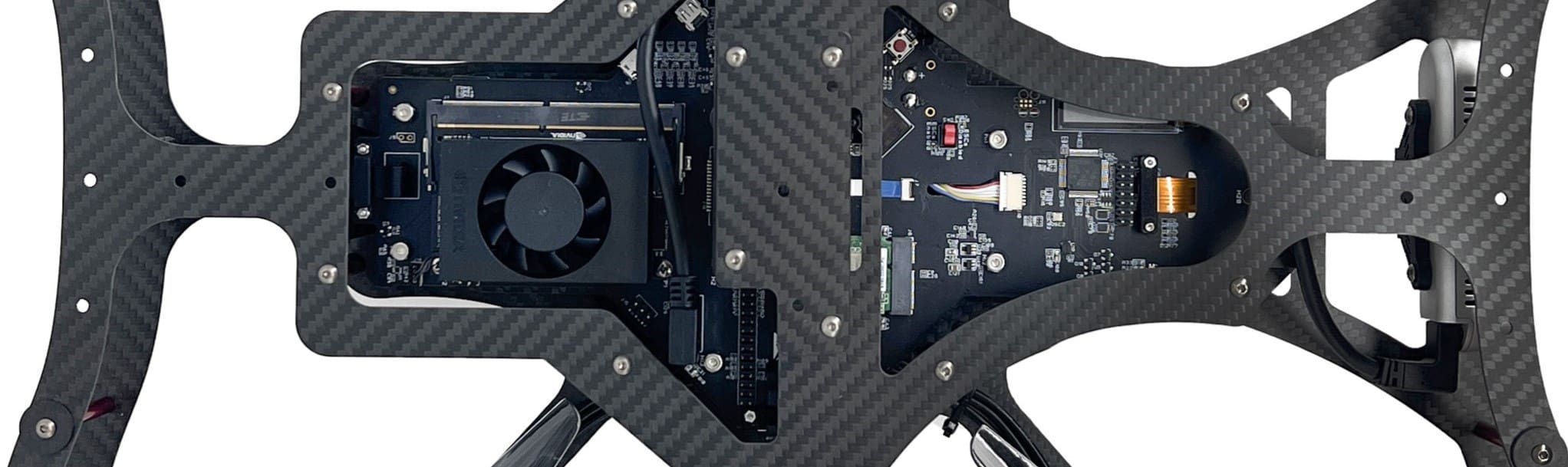
Under the hood, QCar 2 is powered by the NVIDIA Jetson Orin AGX, which delivers more than five times the computational power of the Jetson Orin Nano typically found in F1TENTH setups. By utilizing Nvidia’s latest GPU technology, QCar2 provides researchers with the flexibility to run complex algorithms like vision transformers and other larger models directly on our platform.
At Quanser, we have designed our own carrier board for the Jetson Orin AGX, ensuring full integration of the compute module’s breakout towards self-driving application development. This design minimizes latency and ensures higher-quality signals, resulting in cleaner datasets and more precise control algorithms.
What does it mean for researchers:
- Generating multi-modal datasets at high rates without bottlenecks.
- Running multiple perception models simultaneously (e.g., LaneNet and YOLO).
- Moving faster from theory to experimentation with reliable, consistent performance.
- Application-relevant hardware integration – RGB-D sensing, 360 vision, etc.
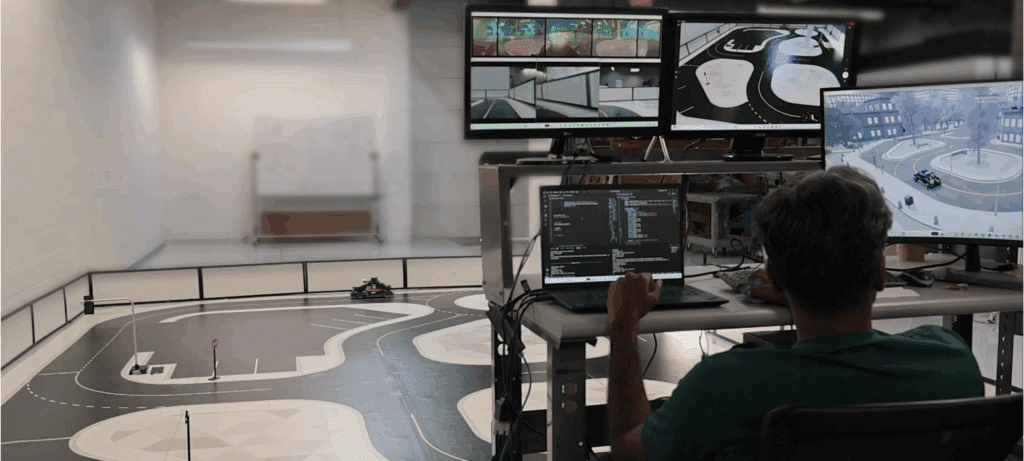
Self-Driving Car Studio
QDrone 2: A platform that accelerates Aerial Autonomy Research
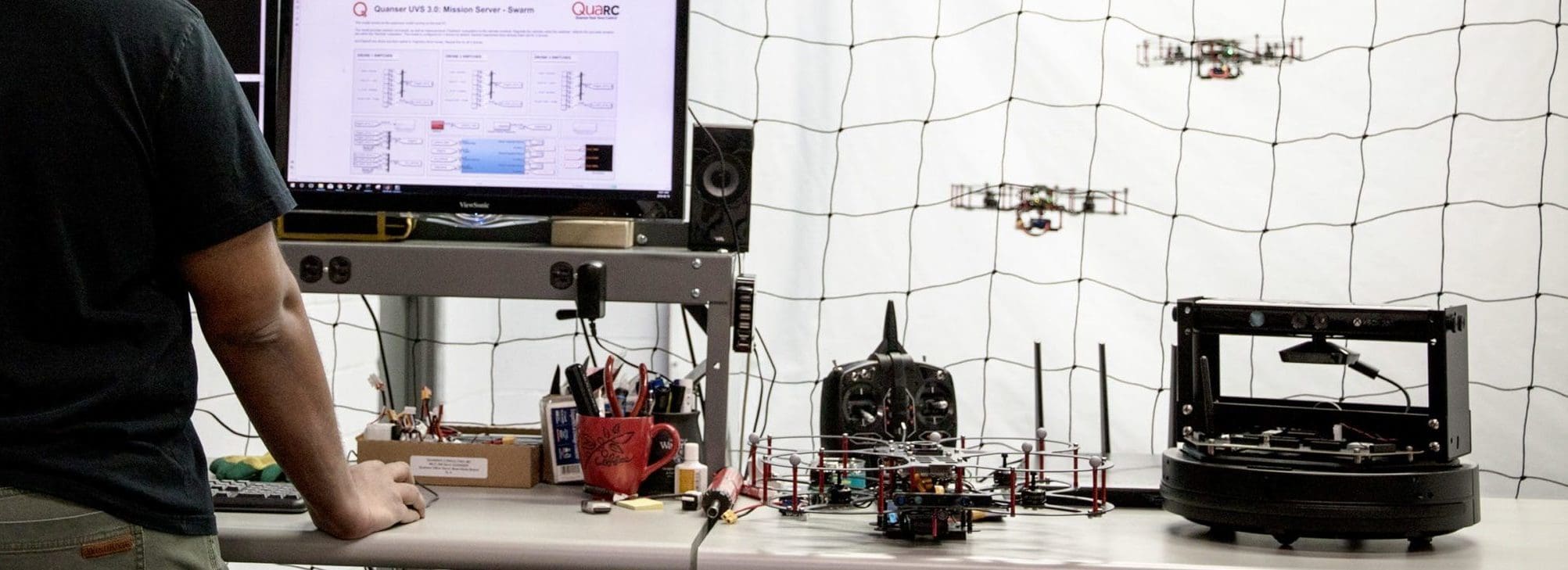
In aerial research, QDrone 2 delivers capabilities that go beyond what other research drones offer. QDrone 2 follows suit with the QCar 2, and comes with an Nvidia Xavier NX. This compute module also expands the capabilities and applications researchers can develop. It is equipped with high quality sensors such as wide-angle cameras, a time of flight sensor, dual IMUs, and RGB-D sensing, for complex application development that expands the scope of what’s possible with an aerial research platform.
Out of the box, QDrone 2 comes with a suite of integrated sensors, mounted in an impact-resistant carbon frame that prioritizes safety without compromising research potential. Software support spans MATLAB/Simulink, Python, and ROS, giving research teams the flexibility to work in environments they already know.
What does it mean for researchers:
- Complex systems design where the computational power of the QDrone2 enables researchers to expand the types of use cases they can consider.
- Faster path to publication by avoiding DIY sensor integration and software troubleshooting.
- Safe deployment with Quanser’s digital twin, which allows for simulation and validation before flying.
- Scalability with support for third-party motion capture systems utilizing VRPN, making it easy to add QDrone 2 into existing drone labs.
QDrone 2 has already proven its value in academic competitions and published projects. York University, Canada has used the platform for autonomous building inspections, as well as load balancing and optimal path planning research — combining MATLAB and ROS for robust results.
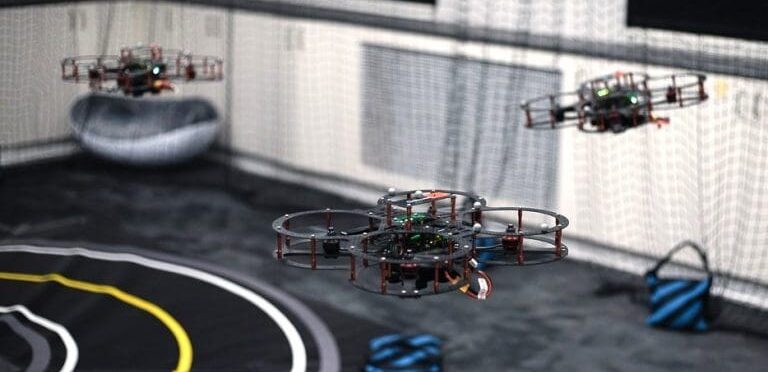
QDrone from Queen’s Autonomous Robotics Research Group – Queen’s University
How to Maximize Research Outcome
For researchers, the differences between a DIY setup and Quanser’s turnkey platforms translate directly into measurable gains:
- Process: Months of setup and debugging are eliminated, giving more time for real experimentation.
- Cost: Reduced hidden costs of student hours spent on assembly and debugging.
- Accuracy: Higher-quality signals and datasets lead to more reliable models and results.
- Scalability: QCar 2 and QDrone 2 integrate seamlessly with the Quanser ecosystem and existing lab infrastructure.
- Flexibility: Researchers can run complex workloads on one platform, validate them virtually using digital twins, and seamlessly transfer across QCar 2 and QDrone 2.
- Support: Quanser backs every platform with academic resources and dedicated technical support — ensuring research moves forward without interruptions.
Conclusion
Ready to accelerate your research? Book a chat with us or request a demo to explore how QCar 2 and QDrone 2 can fast forward your autonomous systems research with accuracy, safety and efficiency.
If you are preparing your next publication, don’t miss the new citation feature now available on all product pages, as well as the brand–new research paper page. They are designed to highlight how extensively Quanser solutions are being used in research communities.
The technical perspectives and research insights in this article were provided by R&D Engineers Zinan Cen and John Pineros from Academic Application Team, whose work drives innovation in the QCar2 and QDrone2 platforms supporting advanced autonomous systems research worldwide.