

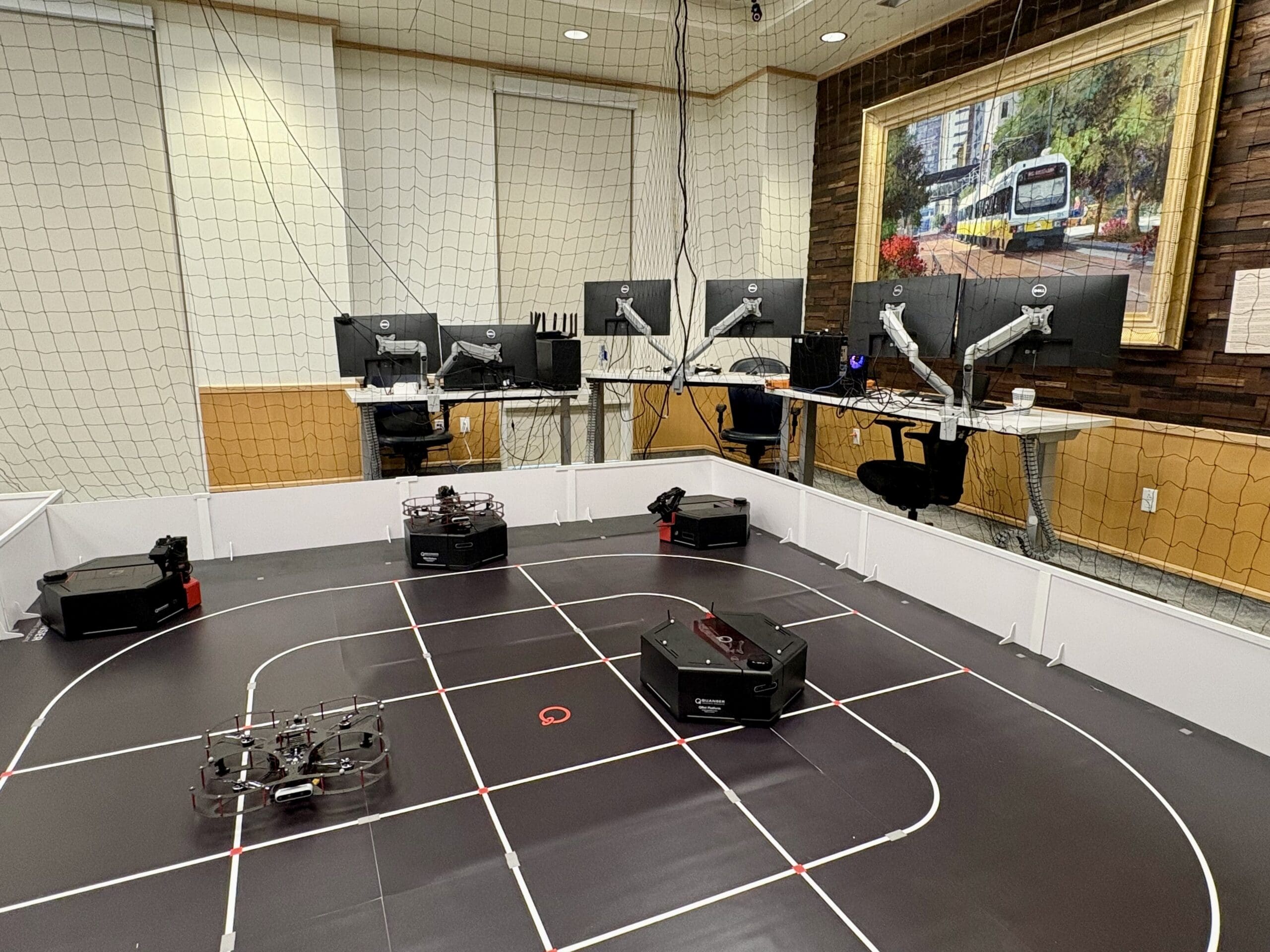

Quanser has worked with thousands of universities over the last 37 years to build, expand, and update engineering labs all over the world. If there’s one overarching reality of the academic world that we have learned over the years it’s that labs come in all shapes and sizes, with different goals and approaches to teaching and research. Not only that, but the needs of an engineering lab change over time as the administrative priorities and investment and divestment of resources change to meet new goals often aligned to recruitment numbers, student retention, and reputation building.
What does this mean?
What this means for the team that is tasked with creating a lab that meets the learning outcomes of one or many groups of students, as well as institutional goals, is that the lab design must be academically efficient. Academic efficiency, as we have come to call it, is in essence balancing the resources invested into a lab (faculty and staff time, student time, budget, space, etc.) with the learning outcomes students achieve. As the number of students grows, or the target set of learning outcomes are expanded, so too should the investment of time, space, and resources grow to balance out the expanded requirements. However, the opposite is also true, that as the number of students decreases, resources can be redistributed out across other courses and departments to rebalance the investment.
The act of rebalancing lab resources over time to adjust to changing goals and expectations for learning outcomes, and changes in cohort numbers, we call sustainable lab management.
How?
I’ve touched on the scaling up and scaling back of resources dependent on the initial lab investment and reception, as well as changes in academic climate over time. However, there are other methods that can be used to design an efficient lab that maximizes student learning outcomes while minimizing the resources invested. The first approach that we have seen implemented across the world is simply to consider the centralization of a lab.
Faculty and program labs
This more traditional approach to the implementation of a lab program we tend to refer to as the partially centralized, or faculty lab. These labs tend to be specific to a course or engineering focus area such as robotics, control systems, mechatronics, etc. They are sometimes used across multiple years of undergraduate studies, occasionally stretching into graduate research. They have more specialized equipment that is focused on the specific course outcomes and research objectives. They’re departmentally or faculty managed, with sessions administered by course instructors, TAs, and lab technicians from the department.
Multidisciplinary labs
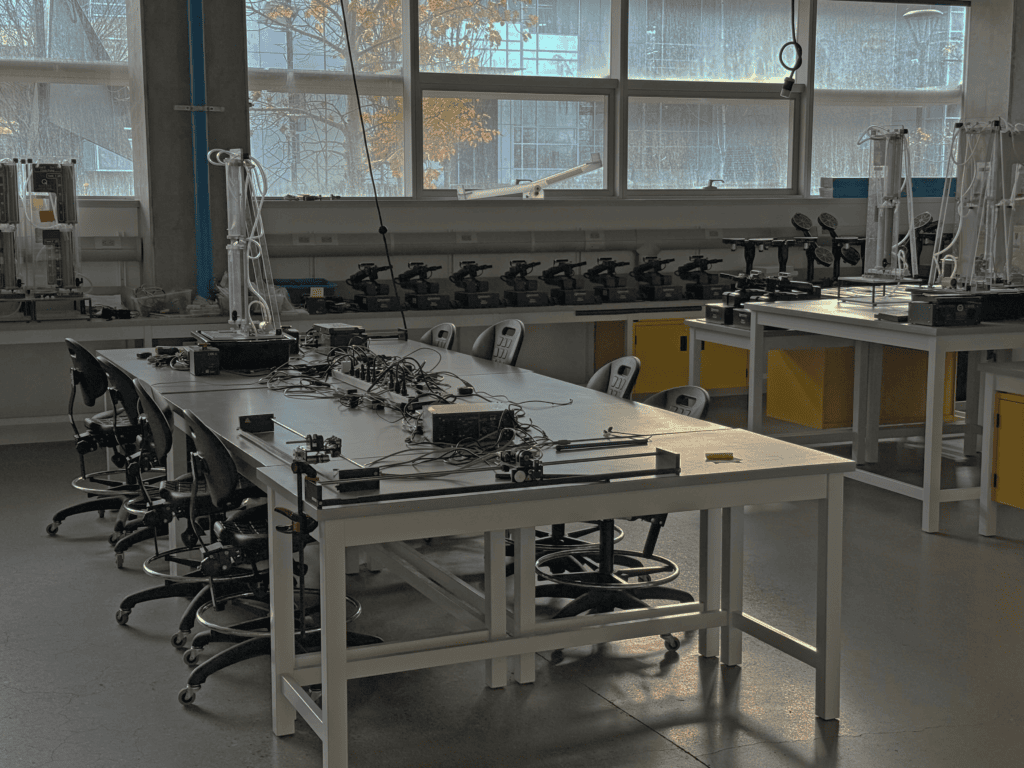
A more centralized approach to a lab program, one that has been growing in popularity in regions where space is at a premium, is the multidisciplinary lab. This approach to a lab requires a significant coordinated investment from multiple departments, but in turn offers students across a wide range of courses and departments learning experiences that can bridge multiple courses and years. These labs are often staffed by specialized technicians and teaching assistants that are responsible for all lab activities. The equipment is often more general purpose and teaching focused. Budget is shared across departments but is also typically internally funded as opposed to external grant funding. This configuration, by design, has the most potential to deliver learning outcomes that bridge multiple courses, years, and departments with a single set of resources.
Hybrid and remote labs
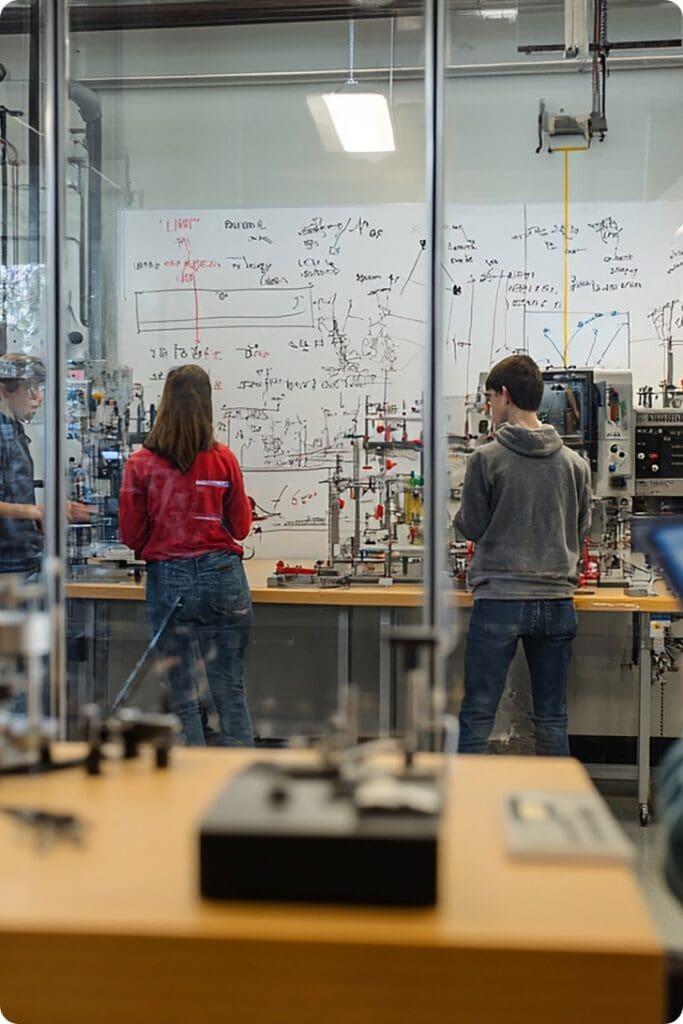
The final configuration is familiar to many institutions that having been working for the past several years to leverage investments made during the pandemic. Remote, hybrid, or decentralized labs offer the largest cohort of students access to learning experiences that are often highly focused on specific courses. Students often bring their own equipment, minimizing the required administrative investment while allowing them to work though material in a place and at a pace of their choosing. There are varying degrees of staff and faculty needed, though there is often a high potential need for technical support and documentation.
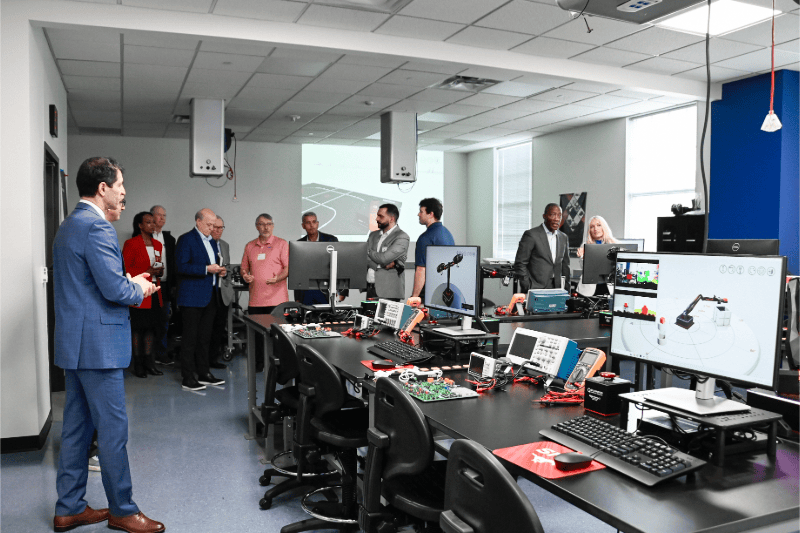
The second approach that we have seen serve as an effective approach to sustainably managing a lab investment over time is using academic lab platforms.
Academic lab platforms
In working to develop effective solutions for our partners and colleagues over the past decades, we have converged on a platform approach to lab equipment that is ideally suited to help move the needle on the parameters that effect lab efficiency: lab times and space requirements, faculty and staff commitments, equipment costs, and learning and research outcomes. Our overarching philosophy as an academic partner is to ensure that our platforms contribute by increasing utilization as much as possible through flexible designs and software support, diverse application context, and rich resources.
As research platforms, our solutions offer a valuable approach to efficient research by taking an open architecture approach to our software that is as accessible as possible, and platform agnostic. We also provide solutions that are electromechanically flexible, while remaining reliable, repeatable, and robust. Finally, we try to ensure that our systems are over-instrumented and if possible over-powered so that they are valuable for years to come.
What this means in practice is that we diverge from the typical approach to research platforms which is to build a bespoke solution that fits the needs of a single project. As a general solution provider, we design validation platforms that are as versatile as possible so that they can be used across multiple projects over generations of graduate students. Some platforms such as mobile robots are generally versatile and multipurpose, while other systems such as drones are generally application specific and require more consideration. Generally, we aim for solutions that maximize expected use cases while minimizing compromise … and cost.
When it comes to teaching platforms, we leverage our open architecture approach to enable motivational and authentic learning experiences. This approach also serves to facilitate modern approaches to teaching complex systems including dissection and scaffolding activities. In addition, our systems can easily deliver project-based learning outcomes and even ambitious capstone projects. In keeping with our approach to research, we still combine turnkey high-level algorithms and open low-level access to maximize expected usage across multiple courses.
Finally, when it comes to design, our platforms are designed around the fundamentals of mechatronics engineering to form a foundation for design, and later robotics and autonomy. By focusing on mechatronic foundation upon which all electromechanical systems are built, we can address diverse applications including control systems, robotics, mechatronics, applied AI, and more. This scaffolded approach emphasizes design intuition, testing and integration over basic fabrication. This approach is aligned to industry needs and is cost-effective, which ensures an efficient approach to long-term design outcomes.
Moving away from the challenge of delivering consistent learning outcomes over time, our approach can be leveraged to accommodate an expansion of skills and outcomes using an existing lab investment. Some examples of additional skills that we have seen integrated into existing labs over time include emerging programming languages such as Python and more recently Julia, popular algorithms such as deep learning and MPC, introductory courses including machine learning for business, and applications including smart manufacturing and agriculture.
We are committed to continuing to design and develop platforms that help faculty increase the efficiency of their labs and programs by reducing the time needed to prepare and deliver lab experiences, minimizing the overall budget required to deliver multiple labs and hands-on experiences across programs, and optimizing the space required. Beyond that, our design philosophy aims to ensure that across different lab structures, pedagogical approaches, and strategic tactics, investing in the Quanser ecosystem of platforms is the most efficient way to build sustainable labs that remain efficient and effective over time.