

Back in my first year being a teaching assistant for a mechatronics course, I remember my headache after each lab. Rows of kits lay scattered with random sensors, mixed-up jumpers, half-disassembled components, and I thought to myself, “here we go again…”.
That routine of setting up, organizing, repairing, and replacing hardware was probably familiar to many mechatronics instructors or lab managers. But over the years, I have come to realize that running a successful mechatronics lab is more than just logistics and delivery. It’s also about ensuring students have meaningful and consistent experiences that are tied into their broader engineering education.
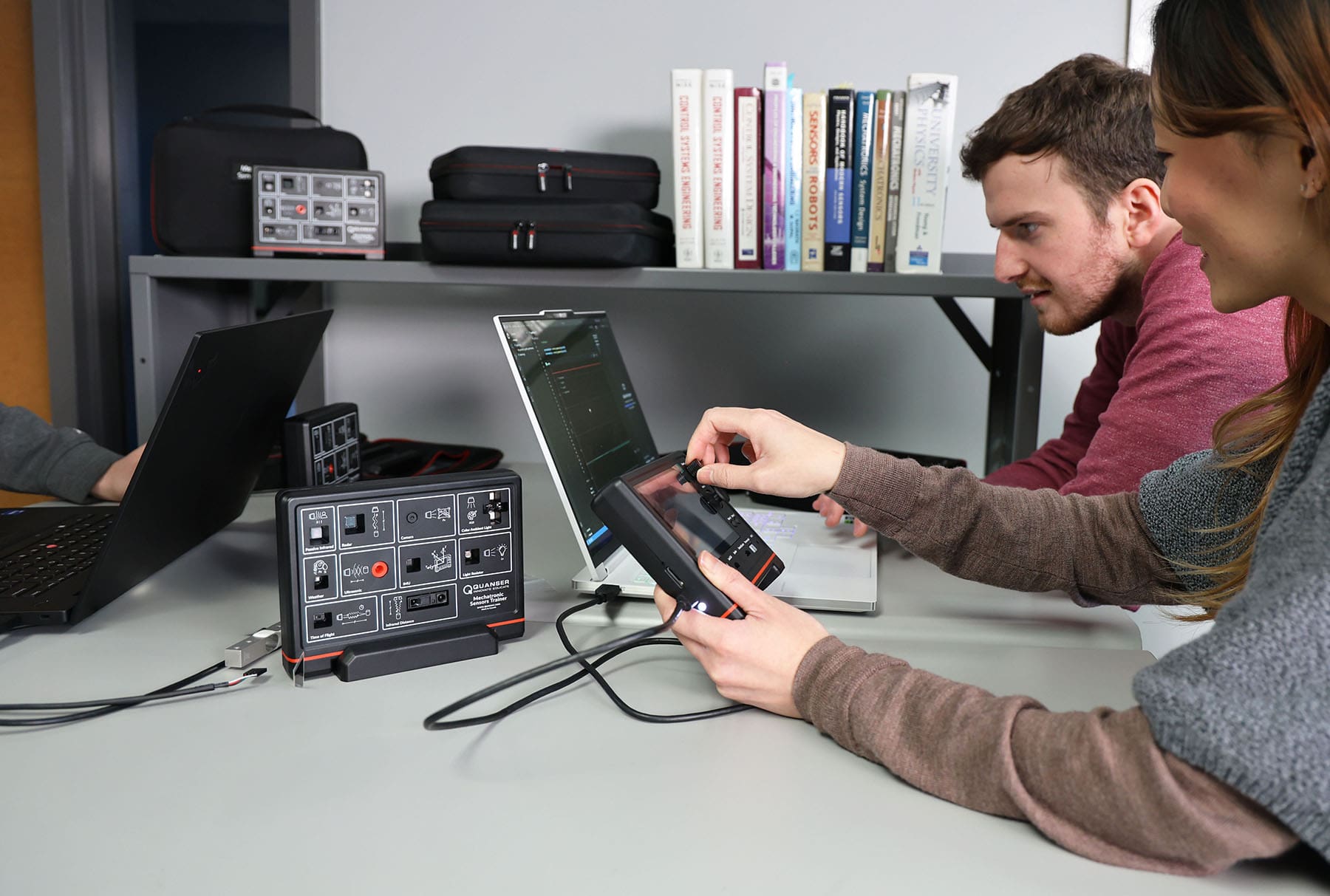
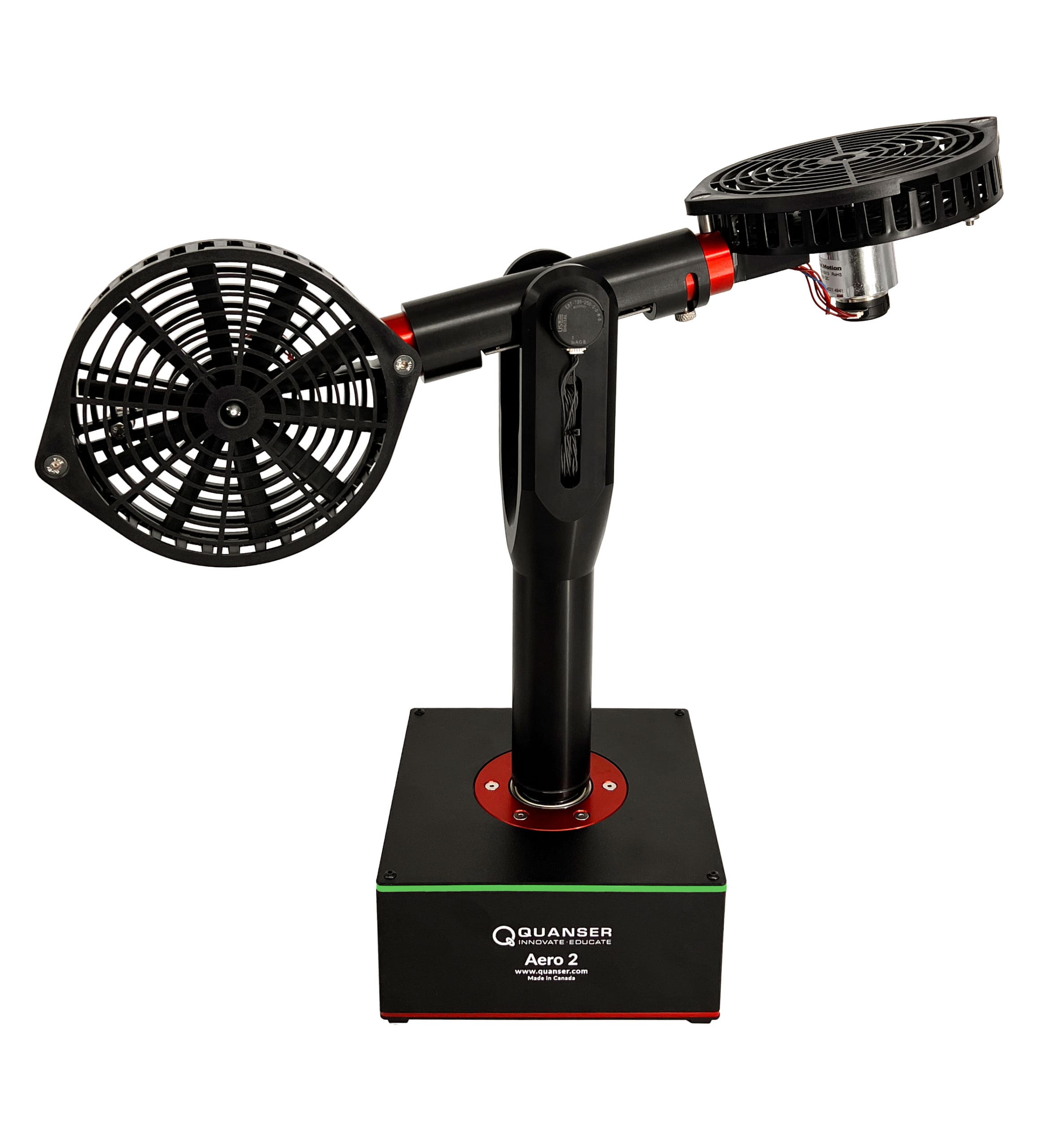
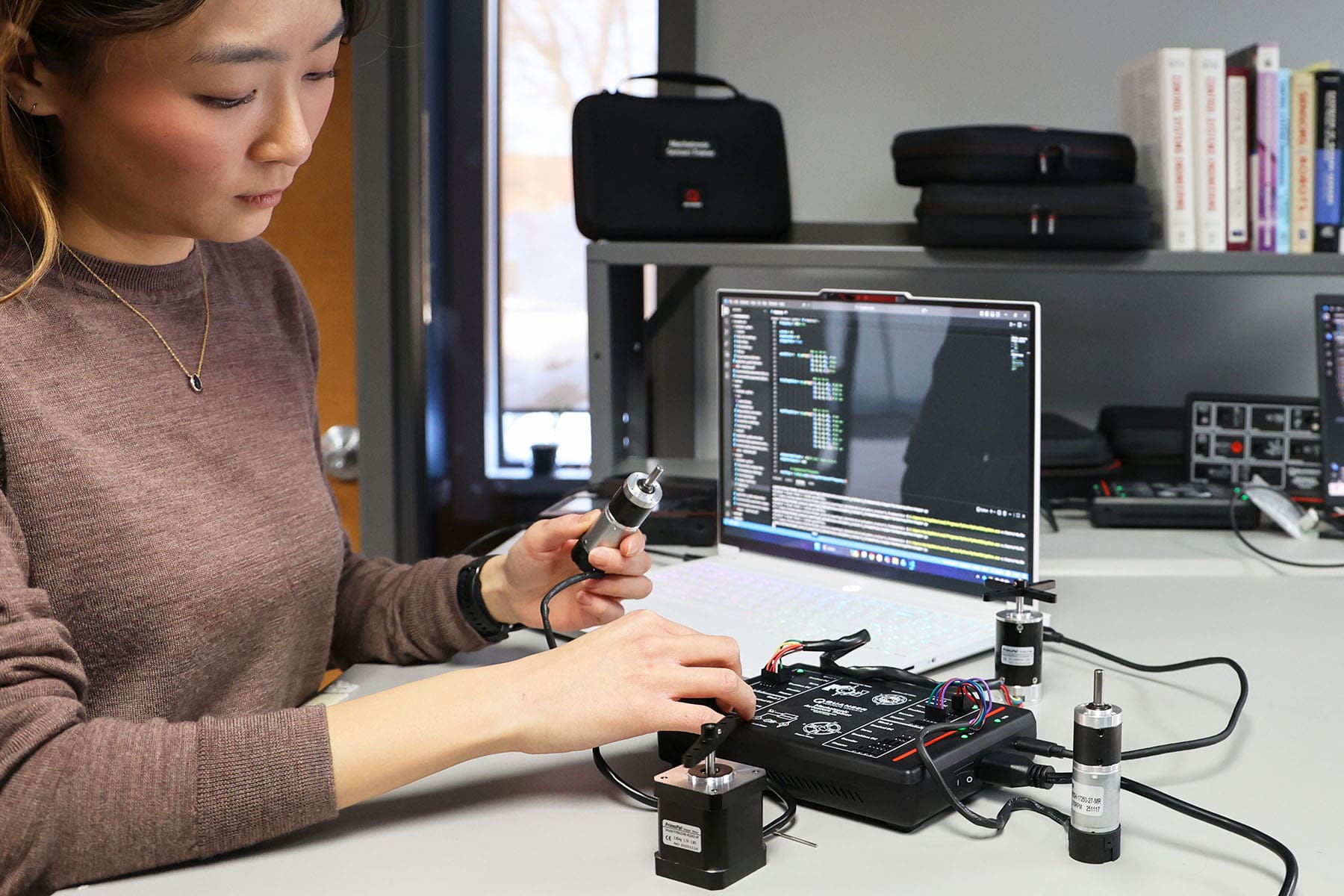
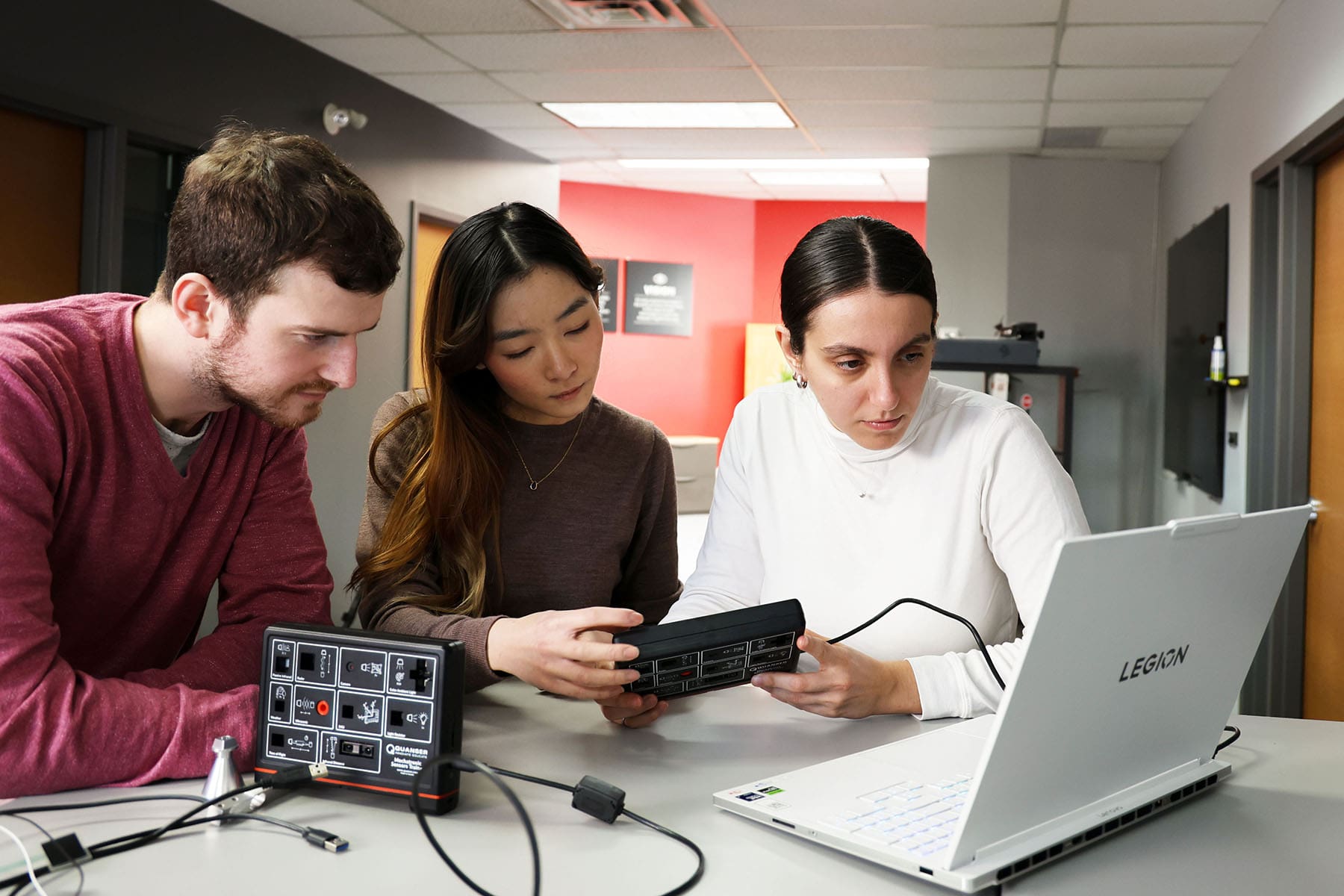
This blog explores how a solution such as Quanser’s Mechatronics Design Lab (MDL), with its integrated Mechatronic Sensors Trainer and Actuators Trainer, can elevate the quality of engineering instruction as well as student experience. Other than solving logistical headaches, this lab also supports curriculum learning objectives and accreditation goals, by combining engineering fundamentals with real world problems, delivered through structured experiential learning.
A Platform That Elevates Engineering Instruction
Teaching mechatronics means guiding students through complex system-level thinking, from selecting components, all the way to implementing control logic. In traditional labs, this process often gets bogged down by unreliable hardware and time-consuming setup. But when students spend more time troubleshooting than designing, the core learning outcomes get diluted.
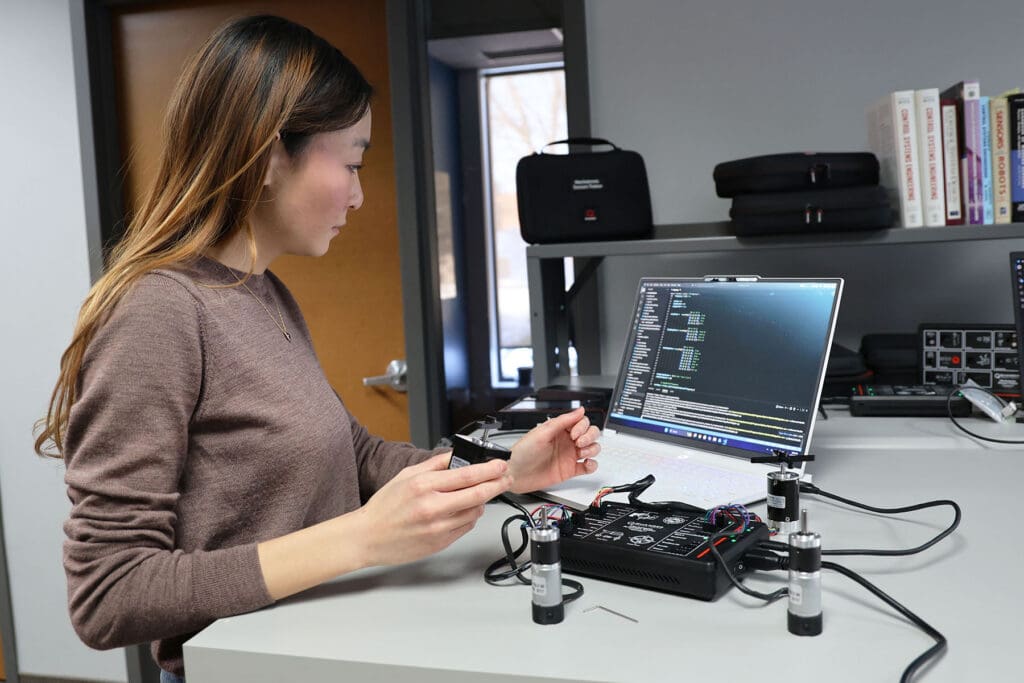
That’s where Quanser’s Mechatronics Design Lab stands apart. Rather than a loose collection of parts, it provides an integrated platform that supports authentic engineering practice. The sensors and actuators trainers are engineered to withstand repeated use, minimizing downtime while ensuring consistency across lab sessions. Built-in sensors, GPIO expansion, and compatibility with both Windows PC and Linux system allow students to explore real-world interfacing and design challenges more efficiently.
The durable design reduces friction from hardware management, allowing instructors to shift focus from logistics to learning. More importantly, the trainers were developed with curriculum in mind. Each hardware feature comes with thoughtfully designed activities that align with learning objectives. From fundamental labs on basic sensors interfacing and operating motors, to advanced challenges involving sensor fusion and control logic, the platform enables students to start from basic experimentation and move into true system design and thinking. It’s a shift from checking boxes to building confidence, and it lays the foundation for deeper engagement across the entire curriculum.
Designed Around Learning Outcomes
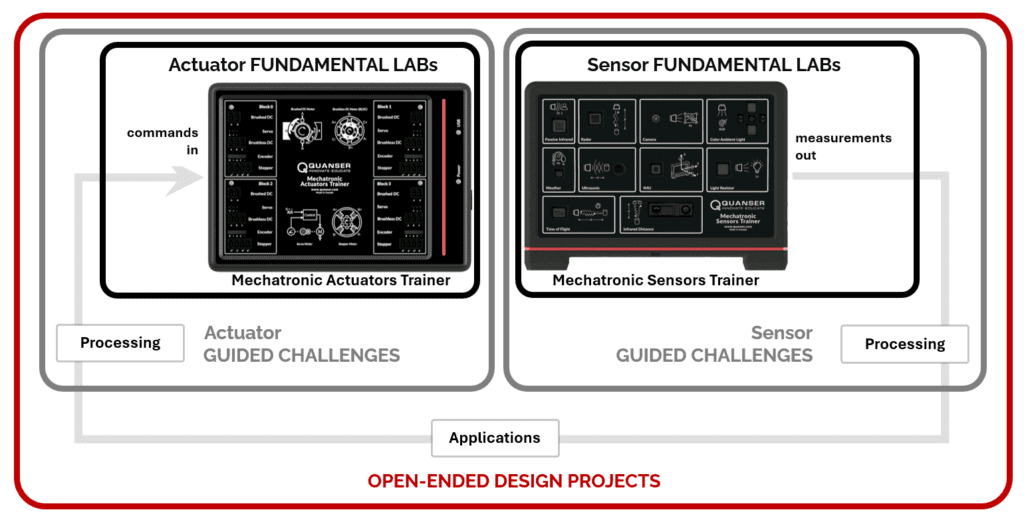
What makes this lab more than just convenient is the full curriculum it’s equipped with. Students begin with fundamental labs where they learn about signal conditioning, data acquisition, and interfacing with a variety of sensors and motors. The curriculum then moves into guided challenges, such as implementing a sensor fusion routine for weather dashboards, and comparing actuator performance across different motor types. These labs and challenges not only help students develop skills, they also develop engineering intuition.
This learning experience culminates in open-ended design projects, building mobile robots, a green house, or smart home systems, that require both sensor integration and actuator control. These projects mirror real-world engineering tasks, combining hardware, programming, and decision-making in cohesive design experiences. At this point it’s not about isolated experiments, it’s about systems thinking, which is what Mechatronics inherently is. Students must understand not only how to wire sensors or drive actuators, but also why specific components are chosen, how they interact, and what trade offs each decision introduces. Traditional lab kits often struggle to maintain continuity and repeatability, but with the Quanser platform, the experience becomes more cohesive.
Built for Accreditation and Curriculum Integration
The Mechatronics Design Lab supports a wide range of core learning outcomes, helping programs meet ABET and CEAB requirements in both technical and professional competencies.
Fundamental labs cover core technical topics that map directly to ABET and CEAB outcomes, for example, guided challenges promote analytical thinking and system-level insight. By the time students reach open-ended design projects, they’re applying knowledge in authentic, multidisciplinary contexts, meeting accreditation criteria like experimentation, system integration, and professional communication.
Combined with support for Python, C, and MATLAB, with reusable hardware built for real-world usage, the lab enables programs to deliver consistent, repeatable, and meaningful experiences across multiple years and courses. It’s a platform that supports accreditation goals while developing real world engineering skills.
Integrating the Lab Across Courses
One of the lab’s biggest strengths is its versatility. It can be integrated into a wide range of courses, from introductory engineering design to advanced robotics and capstone projects. In sensor and instrumentation courses, students can explore signal processing, calibration, and sensor selection. In motor control classes, they study different actuator types and their dynamic characteristics. In design and robotics courses, students build complete systems and refine their understanding of feedback, modeling, and embedded control. In capstone courses, they bring all these elements together in full-cycle design projects.
The lab is equally well-suited for interdisciplinary projects, bootcamps, or makerspace training, offering a consistent and reusable platform across different instructional formats. This continuity helps students build on what they’ve learned across semesters to see the bigger picture, and allows faculty to scaffold knowledge year over year, creating a connected learning experience that aligns with institutional goals. Whether used in introductory labs, design challenges, or graduate-level workshops, the lab supports a coherent vision of engineering education that blends theory, practice, and reflection.
Final Thoughts: A Real-World Platform for Real Engineering Skills
Running a mechatronics lab might start with bins and breakout boards—but it doesn’t have to stay that way. By focusing on system integration, design iteration, and structured learning outcomes, the Mechatronics Design Lab moves the focus from “Did the wiring work?” to “How do we design this system?”
For instructors, it means less setup and teardown, fewer replacements, and more time delivering labs that directly support program outcomes. For students, it means building real confidence. Shifting from troubleshooting connectors to system thinking, learning not just how systems work, but how to design them from the ground up.
If your program is looking to strengthen hands-on experiences while aligning with curriculum standards, a project-ready lab like this could be exactly what you need. Contact us today to get started!