Control Systems & Dynamics
About This Lab
Controls & Dynamics
- Quanser Approach
- Learning Objectives
- Textbook Mapping & Reference Material
- Relevant Controls Programs
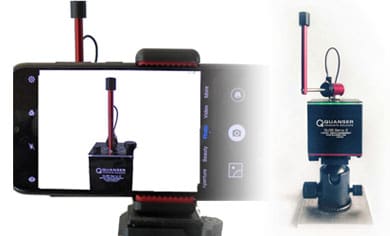
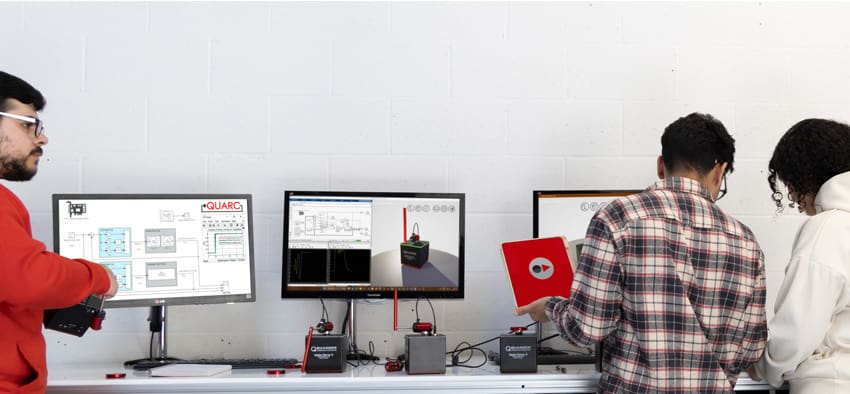
Our approach to Controls education focuses on the development of broad fundamentals as well as skills in applying those fundamentals to application contexts. This education experience involves deploying control systems to a variety of SISO, SIMO and MIMO systems from aerospace, robotics, mechatronics and autonomous systems.
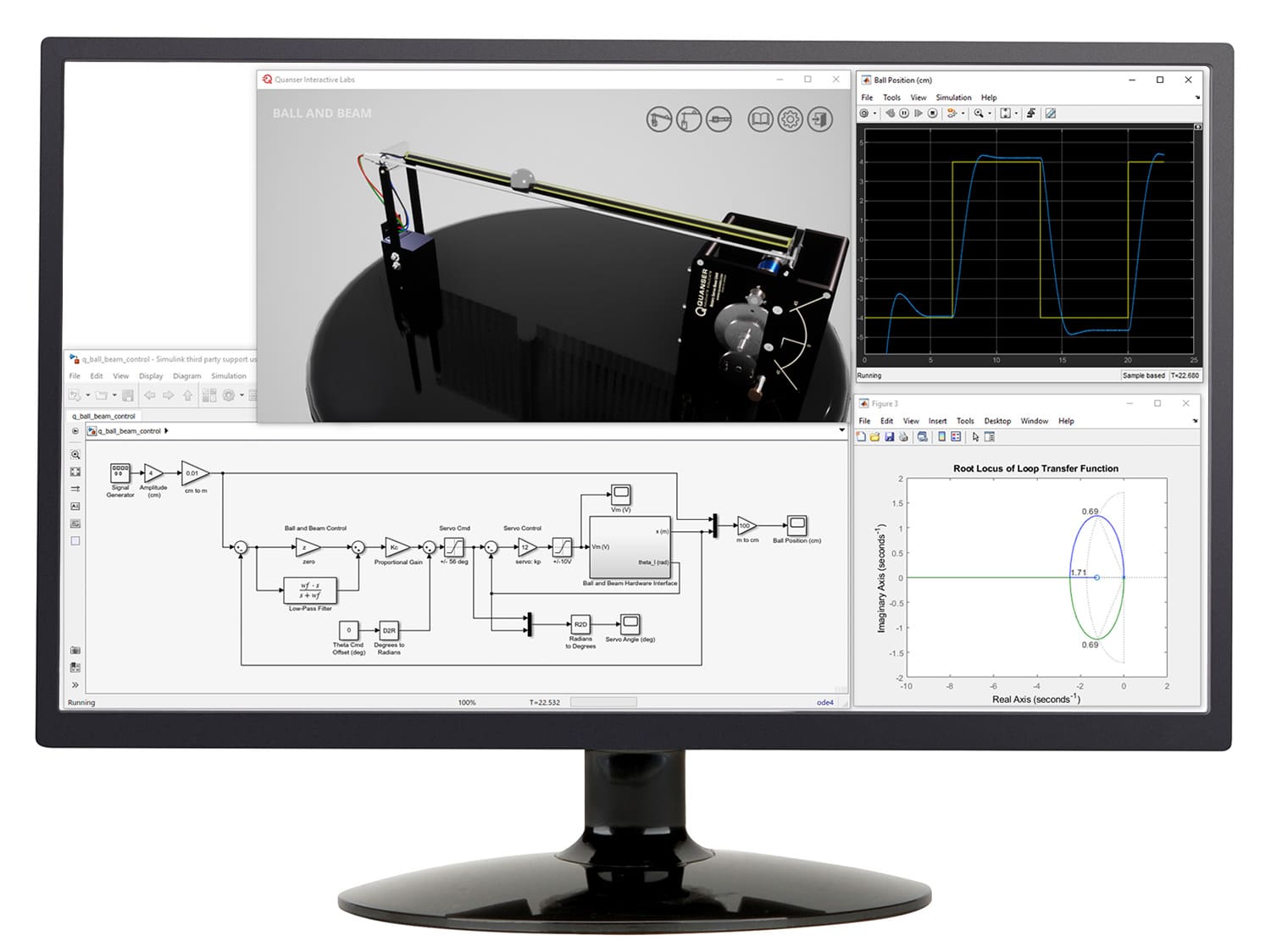
The provided curriculum includes over 40 labs covering a range of topics from modeling techniques (step response, frequency response, block diagram, state-space, etc.), system characterization and parameter estimation, hardware interfacing, position and speed control, stability analysis, qualitative and quantitative P/PD/PI/PID control, energy control, state-feedback control, gain scheduling and more.
- Apply common modeling techniques to a variety of SISO, SIMO and MIMO systems
- Gain broad engineering literacy in the characterization and performance of plants and controllers
- Walk through a complete controls pipeline from plant modeling, sys ID, control design and hardware deployment
- Contrast and analyze the performance of modern control methods, such as PID, state-feedback, MPC, etc.
- Control Systems Engineering by N. S. Nise
- Feedback Systems by K. J. Astrom, R. M. Murray
- Feedback Control of Dynamic Systems by G. F. Franklin, J. D. Powerll and A. Emami-Naei
- Modern Control Engineering by K. Ogat
- Automatic Control Systems by F. Golnaraghi and B. C. Kuo
These institutions across the world have invested in our Controls & Dynamics curriculum.
- Tsinghua University, China
- Queen’s University, Canada
- Sacred Heart University, USA
- University of District of Columbia, USA
- Beijing Institute of Technology, China
Quanser has engaged with the following partners for key transformative experiences across their
entire program.
- Tec De Monterrey, Mexico
- University of Manchester, UK
Related Products

Related Case Studies
Create Your Own Labs with Open-Architecture Servo to Reinforcing Student Learning and Unlocking Grants
How AERO Prepares Undergraduates for Advanced UAV Control
An Innovative Project-Based Learning Approach to Modern Controls Education
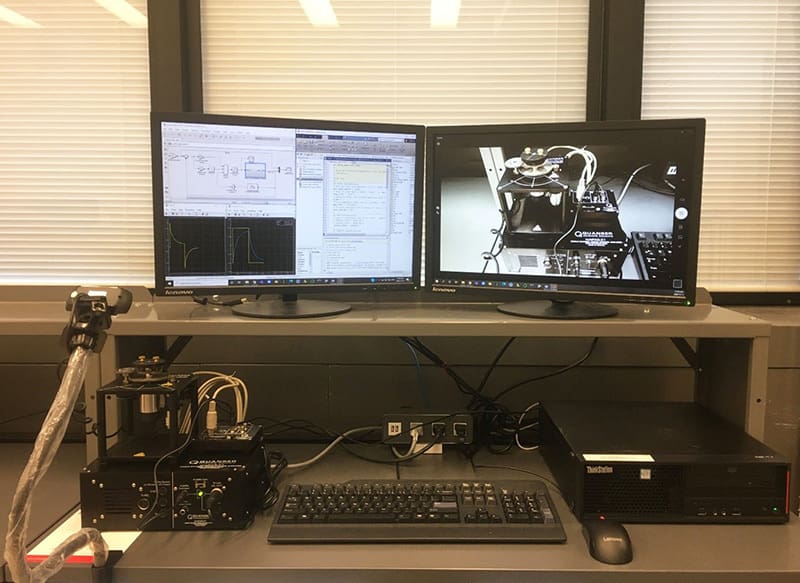
A HYBRID LAB EXPERIENCE: Blending Hands-on Explorations with the Flexibility of Virtualization
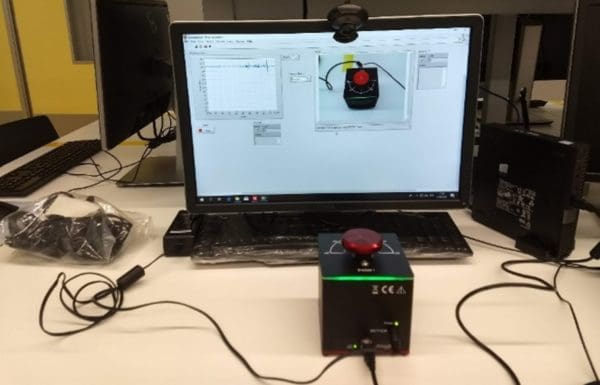
Successful Delivery of an Online Controls Lab
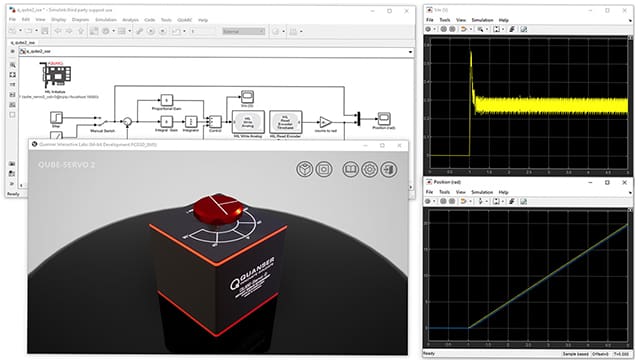
Digital Twinning Enables Seamless Delivery of a Virtual Control Theory Course
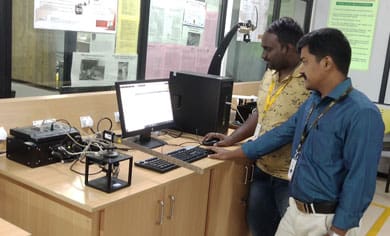
Deep Reinforcement Learning Control for a Rotary Flexible Link System
Reinforcing Student Learning of Control Theory Using Quanser Servo and QUBE